

















- Baking Soda for Brushing Teeth: Pros & Cons
- Pros of Brushing Teeth with Baking Soda
- Cons of Brushing Teeth with Baking Soda
- Related Articles
- FAQs
- References
Baking Soda For Brushing Teeth: Pros & Cons
10 minute read
Last updated 06/2025
Share

Baking Soda for Brushing Teeth: Pros & Cons
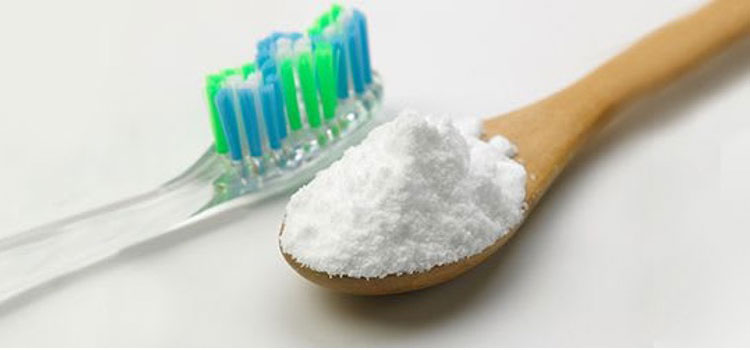
Baking soda has long been used as an alternative to toothpaste. Many people will admit to brushing teeth with baking soda. Today, many toothpaste manufacturers incorporate baking soda into their formulas. As with most things, there are pros and cons associated with using this agent as a toothpaste alternative.
Pros of Brushing Teeth with Baking Soda
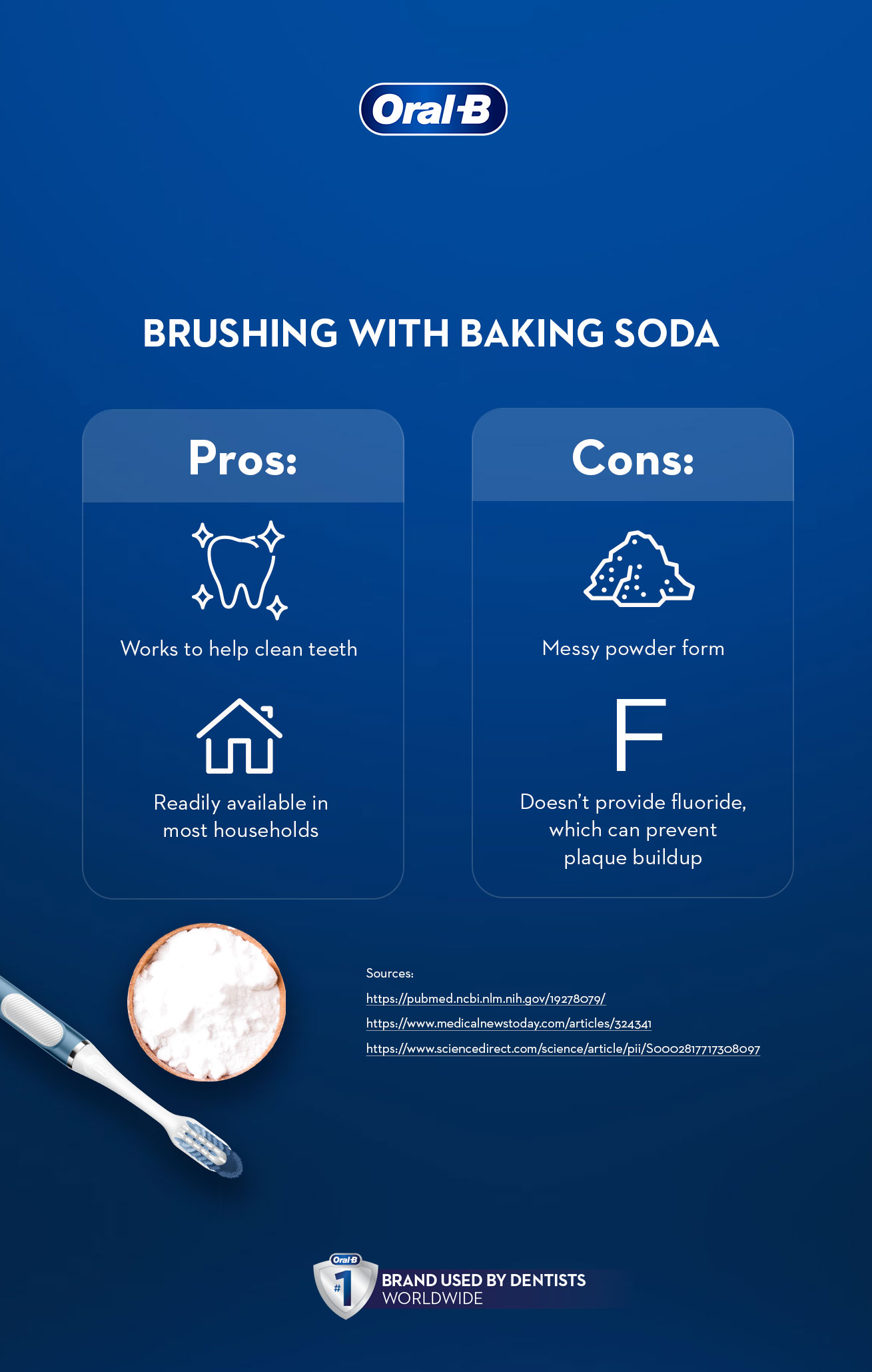
- It works to help clean teeth. According to the Journal of Clinical Dentistry (June 2008), brushing teeth with baking soda products was more effective than using products without baking soda.
- Its inexpensive. If you use just baking soda, a box will last you for a long time and costs less than 1.
Cons of Brushing Teeth with Baking Soda
- Its messy. Brushing teeth with baking soda may be inexpensive, but its certainly not neat. Baking soda manufacturers have not mastered the handy packaging you find among most toothpastes.
- It feels gritty. Anyone who has experienced brushing teeth with baking soda will most likely comment on the unpleasant feeling of baking soda throughout their mouth.
- Brushing with baking soda alone will not provide you with the fluoride you need that could help re-mineralize teeth or prevent the damage that bacteria in plaque causes.
Skeptical of brushing your teeth with baking soda alone? You could try using a baking soda containing toothpaste instead. Using a fluoride & baking soda toothpaste also strengthens teeth, keeps teeth clean, and aids in whitening by removing surface stains.
Science worth a scroll.
Pain Relief Toothpaste for Sensitive Teeth
Sensitivity, also known as dental hypersensitivity or dentinal hypersensitivity, is the pain experienced, usually when eating or drinking. Most people have experienced a form of tooth pain at some point in their lives.
Read more
Brighten Your Smile with a Whitening Toothpaste
When used regularly, a whitening toothpaste can help remove stains and plaque and contribute to a healthy smile.
Read more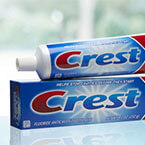
Strengthening Teeth With Fluoride Toothpaste
When you use a fluoride toothpaste, you’re strengthening your tooth enamel, which helps to prevent tooth decay. Fluoride can also help repair teeth that have suffered minor tooth decalcification (first step in the breakdown of the tooth surface).
Read moreFAQs
Is it safe to brush with baking soda every day?
Baking soda is mildly abrasive and may help remove surface stains, but brushing with baking soda every day is not the best choice for everyone. Baking soda alone does not provide fluoride, which helps protect teeth from cavities. If you want this benefit, consider a fluoride toothpaste that contains baking soda and ask your dentist for guidance if you have sensitive teeth, enamel wear, or gum recession.
Does baking soda actually whiten teeth?
Baking soda's mild abrasive properties can help remove surface stains, making teeth appear whiter over time. However, it may not be as effective on deep stains.
Can baking soda damage tooth enamel?
Baking soda is mildly abrasive and, when used in moderation, is generally safe for removing surface stains. However, if used too frequently or too aggressively, it can wear down tooth enamel over time, so it's best to use it cautiously and consult with your dentist for personalized recommendations.
Does baking soda kill mouth bacteria?
Baking soda doesn't directly kill bacteria like a disinfectant would, but its high pH can help create an environment that's less friendly for bacterial growth. Essentially, it works more by neutralizing acids produced by bacteria rather than eliminating the bacteria outright.
Should I mix baking soda with my regular toothpaste?
Probably not. It’s a better idea to simply purchase a toothpaste that has baking soda as an ingredient.
References
