







- Oral-B is the First Electric Toothbrush Brand1 Accepted by the American Dental Association
- The Importance of Acceptance by the ADA
- Oral-B Oscillating-Rotating-Pulsating Electric Toothbrushes, the first to be ADA-Accepted
- Oral-B 3D Cleaning Action Technology Provides a Superior Clean
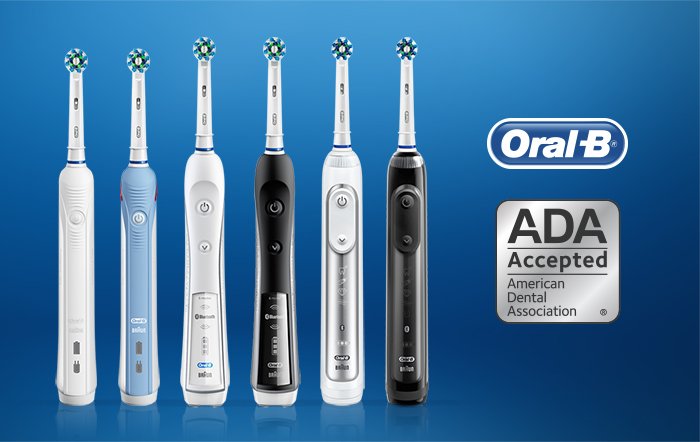
- The Oral-B Line of ADA-Accepted Electric Toothbrushes
- Related Articles
- FAQs
- References
ADA-Accepted & Recognized Electric Toothbrushes
10 minute read
Last updated 06/2025
Share

Oral-B is the First Electric Toothbrush Brand1 Accepted by the American Dental Association
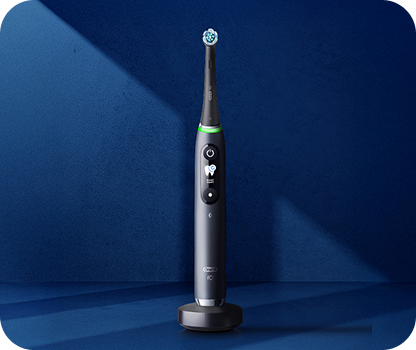
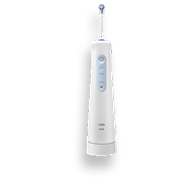
Oral-B ® has been a leader in oral care for over 60 years. And now, we’re the first electric toothbrush brand accepted by the American Dental Association (ADA). All models of Oral-B oscillating-rotating-pulsating electric toothbrushes including the Oral-B Pro 1000, the Oral-B Pro 3000, the Oral-B Pro 5000, the Oral-B Pro 6000, the Oral-B Pro 7000, and the Oral-B iO Series have received this coveted designation. When considering an electric toothbrush, it helps to have guidance from the professionals who set the standards of dental care. ADA-acceptance does just that by letting you know that Oral-B rises to the level of safety and effectiveness that dental professionals recommend.
The Importance of Acceptance by the ADA
The ADA’s Seal of Acceptance was founded in 1931 to help consumers find safe oral health care products that are effective. For Oral-B, that means our accepted Oral-B electric toothbrushes meet the ADA specification for electric toothbrushes, and were proven to be safe and effective at removing plaque and helping to prevent and reduce gingivitis.
Oral-B Oscillating-Rotating-Pulsating Electric Toothbrushes, the first to be ADA-Accepted
Oral-B electric toothbrushes have met all the rigorous requirements for ADA-acceptance. As a part of this process, our toothbrushes had to pass a series of ADA Laboratory tests, and meet the dental standards of the ADA and American National Standards Institute. We also submitted studies proving clinical safety and effectiveness. 2
Oral-B 3D Cleaning Action Technology Provides a Superior Clean
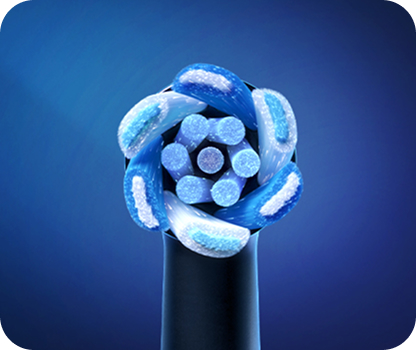
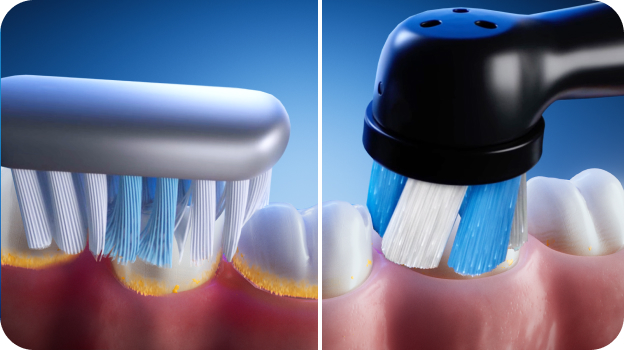
In general, electric toothbrushes clean better than manual toothbrushes. But Oral-B is in a class of its own with its unique dentist-inspired round brush head with special CrossAction bristle design and 3D Cleaning Action technology that pulsates to break up plaque, then rotates to sweep it away. In comparative studies with Sonicare DiamondClean, Oral-B CrossAction 3D Cleaning Action technology was proven to clean better3, 4:
- Oral-B removes 33% more plaque in hard-to-reach places3
- Oral-B improves gum health 32% better than Sonicare DiamondClean3
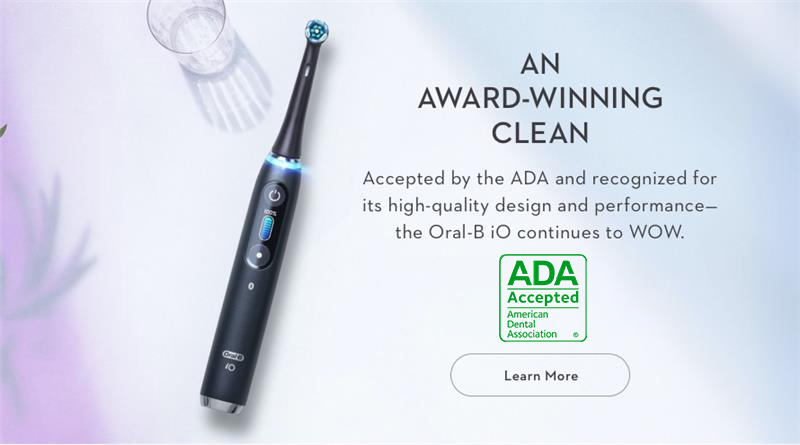
The Oral-B Line of ADA-Accepted Electric Toothbrushes
At Oral-B, we understand that everyone’s oral care needs and preferences are different. Which is why we’ve engineered a full range of electric toothbrushes. All have the 3D Cleaning Action technology that provides superior plaque removal 5 and different models have additional features such as multiple cleaning modes, pressure sensors, Bluetooth connectivity, and even real-time feedback on your brushing habits—all to help you brush like your dentist recommends. Learn more about the features of our electric toothbrushes.
There are many choices, when it comes to electric toothbrushes, but Oral-B is the first to have been accepted by the ADA. Dental professionals agree, 3D Cleaning Action technology safely and effectively removes plaque and helps to prevent and reduce gingivitis.
- Oral-B rotating-oscillating-pulsating models
- Referenced from: http://www.ada.org/en/publications/ada-news/2017-archive/september/its-electric-oral-b-powered-toothbrushes-earn-ada-seal?nav=news
- Klukowska, M, et al., J Clin Dent 2014;25:6-12
- Ccahuana-Vasquez RA, et al., J Clin Dent 2015; 26:80-85
- vs. a manual toothbrush
Did you know, Electric toothbrushes have many benefits including preventing bad breath, gum diseases and removing more plaque than a manual toothbrush*.
Shop this article
1040 | 689
Science worth a scroll.
The Best Electric Toothbrush of 2021
So, you have a missing tooth. Or more than one. And now, you’re ready to replace them and restore your functionality and smile. The big question is, “Should you go with dentures or dental implants?”
Read more
Things to Consider When Buying an Electric Toothbrush
Good oral hygiene isn't only necessary for good dental health. It can also affect your overall well-being. From a young age, we're taught the value of brushing our teeth regularly to keep them and our gums healthy.
Read more
How to Clean Your Electric Toothbrush
Trying to decide between an electric toothbrush and a manual one? If you want one of the easiest and most effective ways to care for your teeth, it’s worth doing some research.
Read more
What's the Best Toothbrush Head for You?
All of our Replacement Brush Heads deliver the oscillating-rotating power that makes Oral-B® the #1 dentist‑recommended brand, but there are a few key differences that make each one unique.
Read moreFAQs
Will whitening toothpaste leave spots on my teeth after braces?
Whitening toothpaste may help reduce surface stains on exposed areas of the teeth, but it will not whiten the tooth surface covered by brackets. After braces are removed, teeth may look uneven in color if plaque, stains, white spots, bonding material, or areas covered by brackets create color differences. Ask your dentist or orthodontist about the best whitening option for your teeth.
Can I get professional teeth whitening with braces on?
Sometimes, whitening may be possible depending on the type of orthodontic appliance, but many dentists recommend waiting until braces are removed so whitening is more even. If you want to whiten your teeth during treatment, ask your dentist or orthodontist what is safe for your specific appliance.
Why do teeth go yellow after braces?
Teeth can look more yellow after braces if plaque or stains build up around brackets, or if there are white spot areas or leftover bonding material that make tooth color look uneven.
Can I use whitening strips with braces?
Whitening strips, gels, or trays may help whiten exposed tooth surfaces, but with fixed braces they can whiten unevenly. If you have braces, ask your dentist or orthodontist which whitening option is safest for you.
References
- https://www.healthline.com/health/whitening-with-braces
- https://www.webmd.com/oral-health/whiten-teeth-wearing-braces
- http://www.webmd.com/oral-health/guide/care-of-braces-retainers
- http://www.webmd.com/oral-health/guide/braces-and-retainers
- http://www.bracesguide.com/duringbraces/braces-pain-management.html
- https://www.verywell.com/braces-and-orthodontic-treatment-1059330
- https://aaoinfo.org/whats-trending/do-braces-hurt-your-comprehensive-guide-to-managing-orthodontic-pain/
- American Journal of Dentistry,Grender, J., et al. (2022). Gingival health effects with an oscillating-rotating electric toothbrush with micro-vibrations and a novel brush head designed for stain control: Results from a 12-week randomized controlled trial.
- Compendium of Continuing Education in DentistryGrender, J., et al. (2022). A 12-Week Randomized Controlled Trial Comparing a Novel Electric Toothbrush With an Extra Gentle Brush Head to a Manual Toothbrush for Plaque and Gingivitis Reduction.
- The Journal of Clinical DentistryTerézhalmy, G., et al. (2016). A Randomized Controlled Clinical Trial to Evaluate Extrinsic Stain Removal of a Whitening Dentifrice.
- Compendium of Continuing Education in DentistryVan Elslande D. (2022). Use of an Oscillating-Rotating Electric Toothbrush and Novel Brush Head to Increase Brushing Motivation and Reduce Plaque Among Orthodontic Patients.
