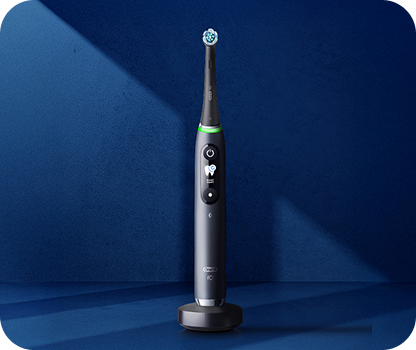
Modern toothbrushes are more than just bristles and a handle. Smart toothbrushes, including the Oral-B iO, use features like pressure sensors, timers, app-connected coaching, and 3D Teeth Tracking to help guide brushing technique, coverage, and pressure.
Read more
Gingivitis is the earliest stage of gum disease—and an important warning sign that plaque is irritating the gums, often noticed as red, swollen, or bleeding gums.It happens when plaque bacteria build up along the gumline and trigger inflammation.
Read more
With all the food, drink, and irritants our teeth come into contact with, it is natural that some discoloration may happen over time.
Read more
You know it's important to brush your teeth twice a day, but how long should you brush each time? In this article, you'll learn how long to brush your teeth, why timing matters, and ways to keep your teeth and gums healthy.
Read more
Do your teeth feel like they have a rough, gritty film on them? Most likely, that's plaque. Dental plaque is a normal byproduct of eating and drinking. If left untreated, it can lead to a wide variety of other problems, including tartar buildup, cavities, and gum diseases such as gingivitis and periodontitis.
Read more
Plaque and tartar are both forms of bacterial buildup on your teeth, but they differ in texture, appearance, and how easy it is for them to be removed. Plaque is a soft, sticky film that forms from bacteria that feeds on sugars from starchy and carbohydrate-rich foods. The bacteria produces acids that can erode tooth enamel. Plaque can be eliminated with regular brushing and flossing. If plaque isn’t removed, it hardens into tartar, which can only be removed by a dental professional.
Read more
Teeth's natural brightness tends to dull and yellow over time due to various factors. In this article, we’ll share tested methods for teeth whitening, as well as tips to keep your teeth white day in and day out.
Read more
You start chewing, and pain strikes. What’s going on with your tooth? Whatever the cause of your toothache, you’re likely looking for relief.
Read more
Dental tartar forms when plaque accumulates on your teeth over time. If left untreated, tartar can cause cavities severely damaged teeth, and even more serious health problems. What can you do to prevent tartar?
Read more
Water flossers direct a stream of water to clean away any leftover plaque* and food debris from teeth and gums—but they cannot remove hardened tartar. Only a dental professional can effectively and safely remove tartar buildup from teeth.
Read more
If you develop tooth decay that has progressed beyond the process of eroding your tooth enamel and has created holes in your teeth, your dental professional will likely recommend a filling.
Read more
Dental grills, also known as “grillz,” have become popular among some teens and adults due to their popularity among celebrities, especially rap musicians. Grills are decorative covers that snap over one or more teeth. They are usually made of gold, silver or other precious metals. But less expensive grills are often made from base metals that can cause irritation or an allergic reaction. There are no long-term studies of dental grills, so there are no data about long-term safety or about problems resulting from long-term wear.
Read more
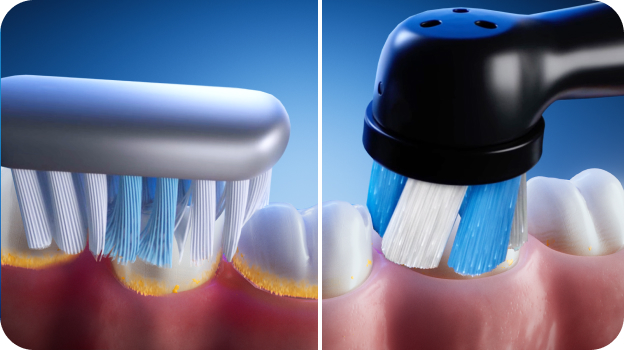
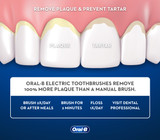
When not removed with regular brushing and flossing, plaque buildup can turn into dental tartar—a hard deposit that can only be removed by a dental professional. Proactively prevent tartar from taking root by brushing with an electric toothbrush which removes 100% more plaque than a regular manual toothbrush.
Read more
Due to the intricate grooves and ridges, back teeth can trap food particles and plaque, leading to increased bacteria growth, periodontitis and a higher risk of cavities. Proper oral hygiene, including regular brushing with fluoride toothpaste, a powered toothbrush like the Oral-B iO2, and using other interdental cleaning tools, is key to prevent plaque buildup and gum disease.
Read more
Teeth whitening occurs in two ways: the first is by removing tooth stains on the outer layer of the tooth as well as below the enamel surface, and the second is by preventing the generation of new stains. It is achieved via stain removal, stain bleaching, and stain protection.
Read more
Yes. In fact, recent research analyzed twenty-six randomized clinical trials across three continents and found that Oral-B iO was by far the best toothbrush for not only plaque reduction but also gum health improvement and transition to gum health compared to manual and sonic toothbrushes. One of the most basic things you can do to prevent plaque from forming is to commit to a good oral health care routine. Using an Oral-B® Electric Toothbrush with oscillating-rotating technology along with a Crest® Pro-Health™ toothpaste and antibacterial rinse—along with regular dental visits—is one of the most effective ways to keep your routine on point and plaque at bay.
Read more
The best way to remove plaque buildup is with a complete oral hygiene routine. When plaque bacteria are not regularly removed thorough a proper oral care routine it can lead to tartar buildup, cavities, and gum disease. An Oral-B electric toothbrush removes 100% more plaque than a regular manual toothbrush, helping to maintain your oral health by adapting to each of your unique teeth for a more perfect clean.
Read more
Your dentist or dental hygienist has recommended scaling and root planing. Now you're probably wondering what that is, what it involves, and how it can improve your oral health. It sounds scary, but scaling and planing are often referred to as a "deep cleaning." The procedure is essential for treating gum disease and preventing more serious dental issues. This article will break down what scaling and root planing are, the benefits they offer, and how to care for your gums afterward.
Read more
You should start flossing your children’s teeth even when they have only their baby (primary) teeth. Once a child’s teeth start to fit closely together, usually between the ages of two and six, parents should start to get their children in the habit of flossing daily. As they develop dexterity, you can help them learn to floss. Children usually develop the ability to floss on their own around the age of 10.
Read more