Causes of Bad Breath
Poor Oral Hygiene
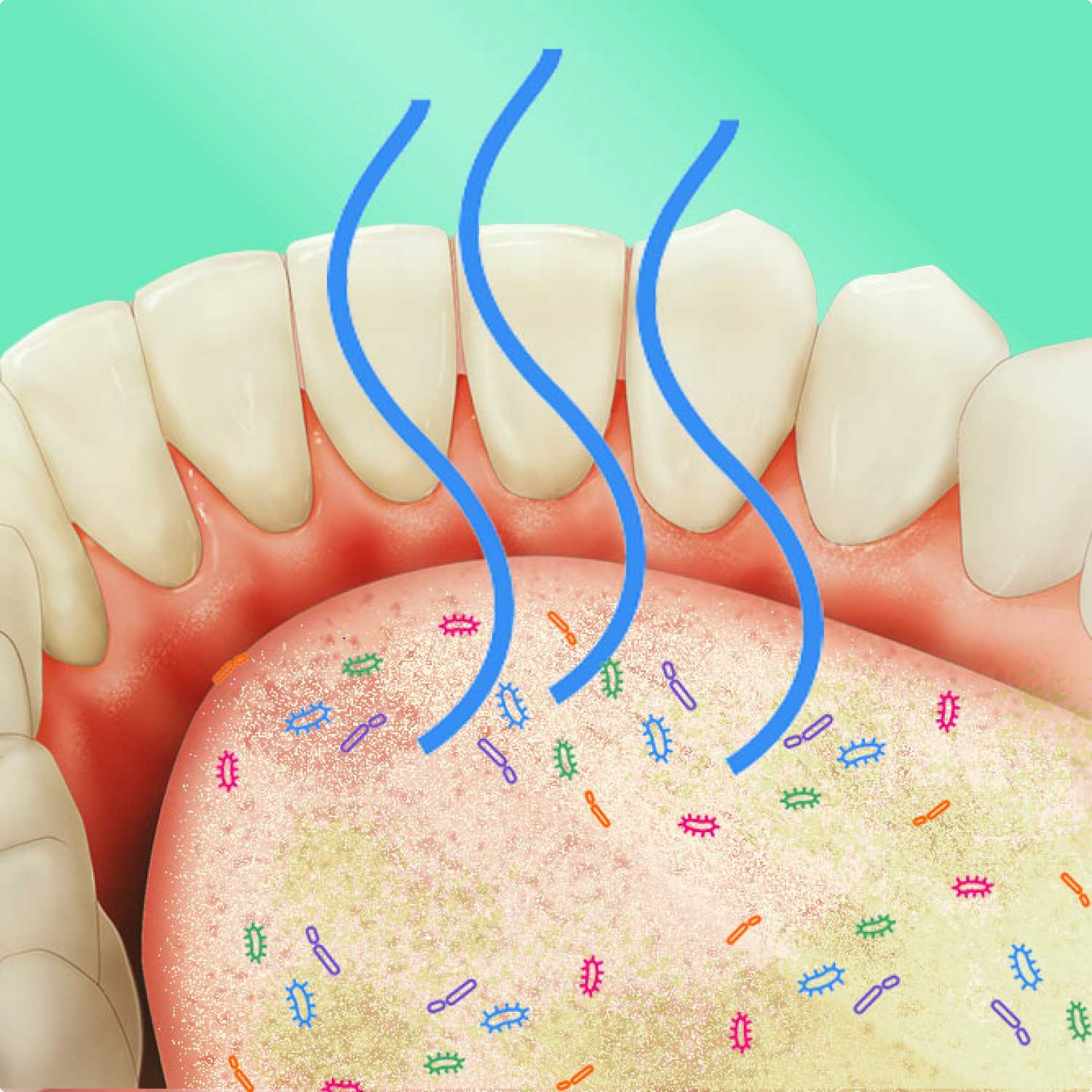
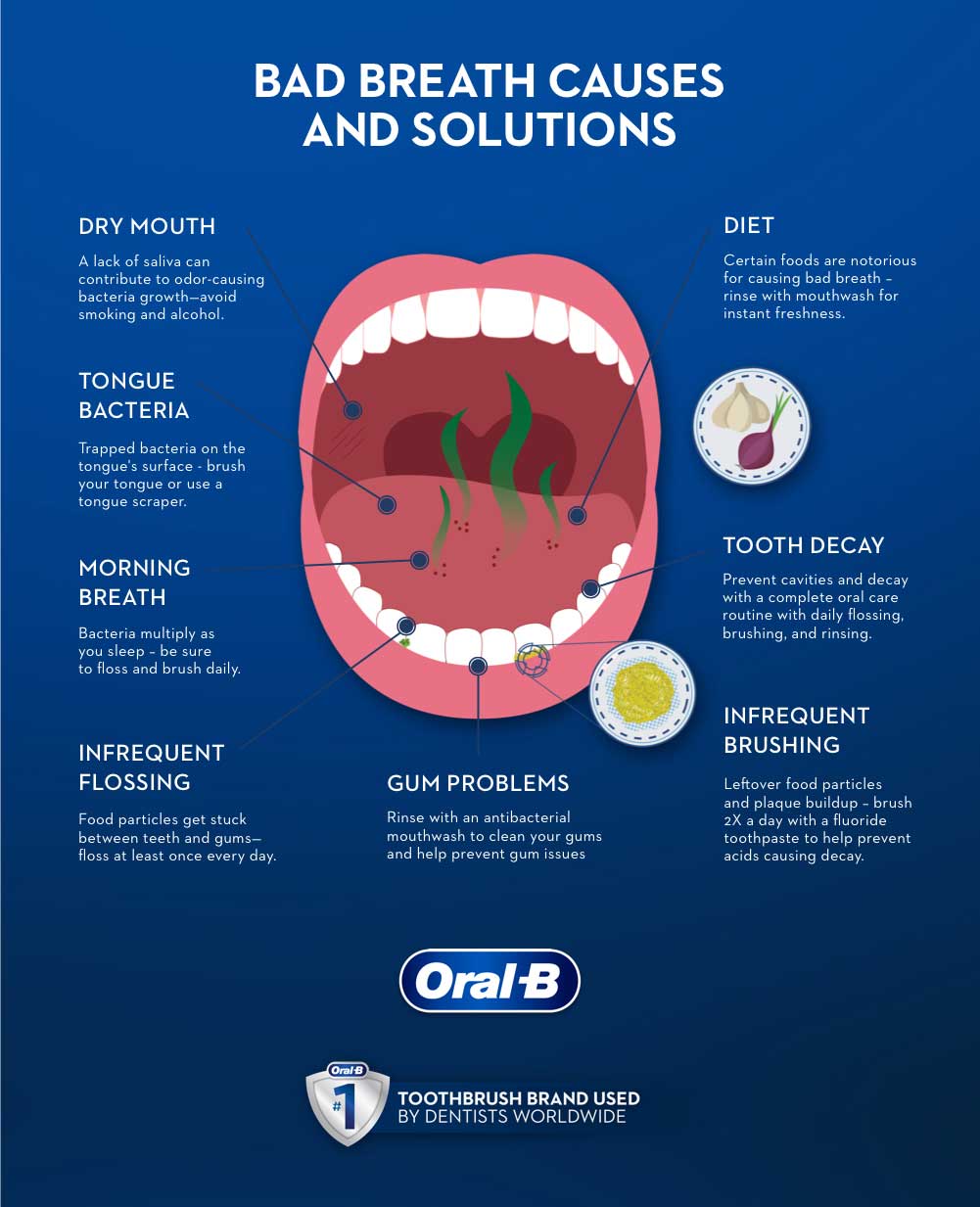
Poor brushing and flossing habits let bacteria build up—especially around the gum line and on the back of your tongue. If you don›t remove it daily, that buildup can lead to plaque, tartar, and bad breath.
Overnight Bacteria Accumulation
You brushed your teeth before bed, so why do you wake up with bad breath? Overnight, bacteria build up on your teeth, gums, and tongue. These bacteria feed on amino acids found in leftover food particles in your mouth, releasing sulfur compounds that cause unpleasant morning breath.
Dry Mouth
Saliva helps prevent bad breath by removing debris and particles left behind by food. If your body doesn't produce enough saliva—even if you're well-hydrated—you may have a condition called dry mouth. Dry mouth may be caused by certain medications or systemic medical conditions.
Symptoms include:
- Stickiness in your mouth
- Thick saliva
- Difficulty chewing and swallowing
- Burning or tingling in your mouth
- Dry lips
If you think you might suffer from dry mouth, talk to a doctor or dentist about possible treatments.
Tobacco Use
Smoking and chewing tobacco impair your body's ability to fight infection, reduce blood flow to your gums, and hinder tissue repair. Tobacco use makes it much harder for your body to fight off the bacteria and plaque buildup that lead to halitosis.
Diet
Certain foods (such as garlic, onions, and some spices) cause temporary bad breath. Brushing your teeth or rinsing with mouthwash can help temporarily, but the smell usually lingers until the food fully passes through your system.
Stress
Stress can lead to natural and lifestyle issues that cause bad breath. For example, your body releases stress hormones (i.e., cortisol, adrenaline, and noradrenaline) which can slow saliva production.
Without saliva to moisten your mouth, tongue, and teeth, food particles and bacteria can more easily build up and cause halitosis.
Certain Dental or Medical Problems
On rare occasions, bad breath can be a sign of more serious conditions, like gum disease, gum abscesses, gingivitis, periodontitis, diabetes, and liver or kidney disease.