













-
Contents
- What is an Erupted Tooth?
- Pericoronitis Symptoms
- Pericoronitis Treatments
- Upgrade Your Oral Care Routine for Healthier Gums
- Related Articles
- FAQs

Erupted Tooth: Pericoronitis Symptoms & Treatment
10 minute read
Last updated 06/2025
Share


This blog has been reviewed and approved by Dr Robert Lee, a dental professional of 35 years
Learn MoreSummary
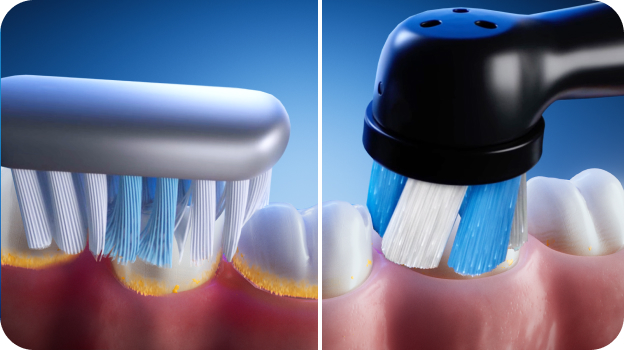
Partially erupted teeth are especially hard to clean around and they are susceptible to gingivitis. Add an electric toothbrush to your daily oral hygiene routine to better protect and improve gum health. Oral-B’s round brush head surrounds each tooth to clean more surfaces and remove 100% more plaque than a regular manual toothbrush.
What is an Erupted Tooth?
A partially erupted tooth is a tooth that has not fully emerged through the gums. Partially erupted teeth are especially hard to clean around and they are susceptible to gingivitis. In particular, if the wisdom teeth on the upper jaw emerge before those on the lower jaw, the upper tooth may bite down on the impacted tooth, which can cause irritation and increase the odds of infection.
Pericoronitis Symptoms
When gingivitis occurs in the area around a partially erupted tooth, the condition is known as pericoronitis. It is most common in wisdom teeth, which can often be impacted, and may remain only slightly protruding through the gum line.
Pericoronitis Treatments
If you develop pericoronitis, your dental professional may start by flushing out the area around the impacted tooth to remove debris. Then he or she may take an X-ray to see whether the tooth is likely to emerge. If the tooth looks likely to remain impacted, the dental professional will probably recommend having both the upper and lower wisdom teeth removed. Sometimes both teeth will be removed during the same dental visit, yet some dental professionals advise doing them on separate occasions. It’s generally a good idea to remove both top and bottom wisdom teeth if either is likely to remain impacted and if you want to avoid the increased risk of gingivitis due to tooth misalignment.
Upgrade Your Oral Care Routine for Healthier Gums
Gingivitis is reversible, so visit your dental professional at the first signs of symptoms for a proper evaluation to decide the best course of treatment. They may simply have you update your daily oral hygiene routine to better protect and improve gum health. In fact, a recent study showed the gum health benefits of the following routine, where 100% of gingivitis patients transitioned to a healthy gingival state**:
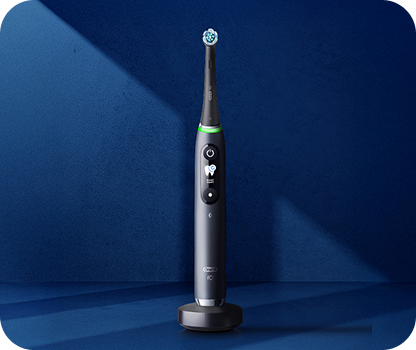
- Brush teeth at least twice a day with the Oral-B iO Series 9 Rechargeable Toothbrush . Its dentist-inspired round brush head expertly cleans with micro-vibrations to remove more plaque than a manual brush.
- Pair the Oral-B iO with a toothpaste containing Stannous Fluoride like Crest Gum Detoxify, its activated foam formula removes plaque bacteria in hard-to-reach areas to better reverse gingivitis.
- Floss at least once a day to remove more plaque and debris from tight spaces. The Oral-B Pro-Health Advanced Floss slides up to 50% more easily in tight spaces than other types of floss. To further improve your gum health, supplement your regular flossing routine with the Oral-B Water Flosser Advanced, its unique Oxyjet Technology helps eliminate more plaque bacteria* for healthier gums.
- Swish with a rinse containing Cetylpyridinium Chloride (CPC), like Crest Pro-Health Multi-Protection Mouthwash which helps protect your mouth from gingivitis and plaque with 0% alcohol.
*Helps reduce plaque bacteria and inflammatory components associated with gingivitis, when used as an adjunct to brushing, flossing and regular professional care.
**Adam R,1 Grender J,2 Timm H,1 Qaqish J,3 Goyal CR.3 1. Procter & Gamble Service GmbH, Kronberg, Germany. 2. The Procter & Gamble Co., Mason, OH, USA. 3. All Sum, Mississauga, Ontario, Canada. Data on file, 2020. Anti-Gingivitis and Anti-Plaque Efficacy of an Oral Hygiene Routine including Oral-B® iO Oscillating-Rotating Electric Toothbrush, Stannous Fluoride Dentifrice, CPC Rinse and Floss: Results from a 12-week Trial
Shop this article
1040 | 689
Science worth a scroll.
What is Gingivitis? Symptoms, Causes, and Treatments
Gingivitis is the first stage of gum disease. Fortunately, gingivitis is often treatable and preventable....
Read more
Wisdom Teeth Pain, Symptoms, and Extraction
Wisdom teeth pain can sneak up on you, whether you're in your late teens or early twenties. Anthropological evidence suggests these third molars.....
Read moreFAQs
What is pericoronitis?
Pericoronitis is inflammation of the gum tissue around a partially erupted tooth, most often a wisdom tooth. It can happen when food and bacteria get trapped under the gum flap around the tooth, leading to swelling, pain, bad taste, or infection.
Why does pericoronitis commonly affect wisdom teeth?
Pericoronitis commonly affects wisdom teeth because they are the last teeth to erupt and may not have enough room to come in fully. When a wisdom tooth only partially breaks through the gums, a flap of gum tissue can cover part of the tooth and trap food, plaque, and bacteria. This area can be difficult to clean, which may lead to irritation, inflammation, or infection. In some cases, the opposing tooth can also bite against the swollen gum tissue and make symptoms worse.
What are the signs of an infected gum flap?
An infected gum flap may exhibit redness, swelling, persistent pain (especially when chewing), bleeding or oozing with pus, and a foul taste or odor in the mouth. In more severe cases, you might also experience fever and swollen lymph nodes, so it is advisable to consult a dental professional for evaluation and treatment.
Can pericoronitis be treated without removing the tooth?
Sometimes pericoronitis can be treated without removing the tooth. A dentist may clean or flush the area, recommend improved cleaning, prescribe medication if infection is present, and take X-rays to evaluate the tooth. If the problem keeps coming back or the tooth is unlikely to erupt properly, wisdom tooth removal may be recommended.
Is salt water effective for pericoronitis pain?
Salt water rinses can help temporarily relieve pericoronitis pain by reducing inflammation and clearing away debris, but they won't address the underlying cause of the condition. For long-term relief and proper treatment, it's best to consult with your dental professional.
