











-
Contents
- What Does Brushing Your Teeth Do?
- How to Clean Your Teeth at Home
- How Long Should You Brush Your Teeth For?
- Steps for Brushing Your Teeth Properly
- Related Articles
- FAQs

How to Brush Your Teeth With a Manual Toothbrush
10 minute read
Last updated 06/2025
Share

What Does Brushing Your Teeth Do?
Learning how to brush your teeth properly is the first step to maintaining healthy teeth and gums by removing food particles, plaque, and tartar from the surfaces of your teeth. Plus, it helps minimize the risk of tooth decay and gum disease, the major causes of tooth loss.
No matter which type of toothbrush you’re brushing with, it’s important to brush 2X/day for the dentist-recommended 2 minutes each session. Keep in mind how often you should change your toothbrush or brush head as well. Dentists recommend replacing your toothbrush every 3 months to continue to make the most of your clean.
How to Clean Your Teeth at Home
While there are several methods of brushing teeth with a manual toothbrush, always ask your dental professional for their recommendation and be sure to follow their instructions. To start, use fluoride toothpaste with a soft-bristle toothbrush, and don't forget to replace it every three months.
How Long Should You Brush Your Teeth For?
To brush your teeth correctly, spend at least two minutes using a recommended technique, which includes 30 seconds brushing each section of your mouth (upper right, upper left, lower right and lower left), both morning and night. Since most manual toothbrushes don't have built-in two-minute timers, you may want to have a clock handy so you can be sure you're brushing long enough.
Steps for Brushing Your Teeth Properly
How you hold the toothbrush depends on which part of the tooth you're brushing.
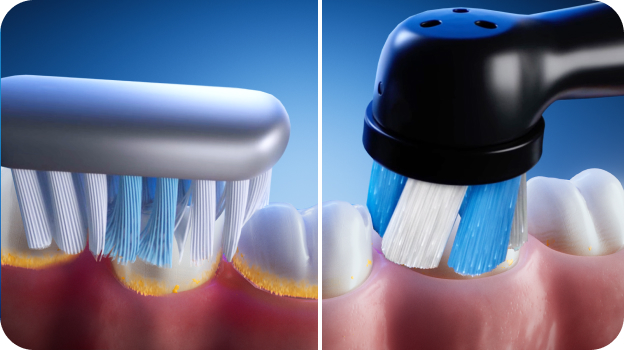
Step 1: Start with outer and inner surfaces, and brush at a 45-degree angle in short, half-tooth-wide strokes against the gum line. Make sure you reach your back teeth.
Step 2: Move on to chewing surfaces. Hold the brush flat and brush back and forth along these surfaces.
Step 3: Once you get to the inside surfaces of your front teeth, tilt the brush vertically and use gentle, up-and-down strokes with the tip of brush.
Step 4: Be sure to brush gently along the gum line.
Step 5: Brush your tongue in a back-to-front sweeping motion to remove food particles and help remove odor-causing bacteria to freshen your breath.
Now that you've learned proper brushing technique, a little discipline in practicing it every day will help make it feel like second nature. It's one of the easiest things you can do to maintain the health of your teeth and gums.
Learn how to brush your teeth properly with an electric toothbrush.
Only from Oral-B, the #1 brand used by dentists worldwide*.
*BASED ON SURVEYS OF A REPRESENTATIVE WORLDWIDE SAMPLE OF DENTISTS CARRIED OUT FOR P&G REGULARLY
Shop this article
1040|689
Science worth a scroll.

Using a Rechargeable Electric Toothbrush
How you brush is just as important as what you brush with to get your perfect clean. Oral-B electric....
Read more
The Best Electric Toothbrush of 2021
Understanding the options available is an important part of choosing the best electric toothbrush for you......
Read more
The Benefits of Electric Toothbrush vs. Manual
Trying to decide between an electric toothbrush and a manual one? If you want one of the easiest ...
Read more
Electric Toothbrushes Remove More Plaque Than Manual Toothbrushes
Yes. In fact, recent research analyzed twenty-six randomized clinical trials across three continents and found....
Read more
How Electric Toothbrushes Help Prevent Gum Disease
Preventing gingivitis is essential to oral health. Oral-B® Electric Toothbrushes are one of the most effective tools...
Read moreFAQs
What are signs I'm not brushing enough?
Common signs include ongoing bad breath and a fuzzy feeling on your teeth caused by plaque buildup. You may also notice swollen or bleeding gums, which can be a sign that bacteria and food particles are not being removed regularly.
What are the disadvantages of manual toothbrushes?
Manual brushes rely entirely on your technique, since they do not offer timers or app-based guidance to help track coverage. This can make it more challenging to brush for the full two minutes and clean all areas evenly.
Can a manual toothbrush remove plaque?
Yes, a manual toothbrush is effective at removing plaque when used with the proper 45-degree angle technique. You must be diligent about reaching every surface and brushing for at least two minutes to ensure thorough cleaning.
Are manual toothbrushes better for gums?
Manual toothbrushes are safe for gum health when used with soft bristles and gentle pressure. Avoiding excessive force helps reduce the risk of gum irritation or recession.
How often should I replace a manual toothbrush?
You should replace your manual toothbrush every three months to keep the bristles effective at cleaning. If the bristles become frayed or worn sooner, it is best to replace the brush early to help maintain good oral health.
