Additional Tooth-Brushing Techniques
The tooth-brushing method described above is the Bass Technique. There are other methods to consider as well, depending on your specific needs. Let’s take a look.
Modified Bass Technique
The modified Bass technique is the same as the Bass technique with one additional movement of the bristles.
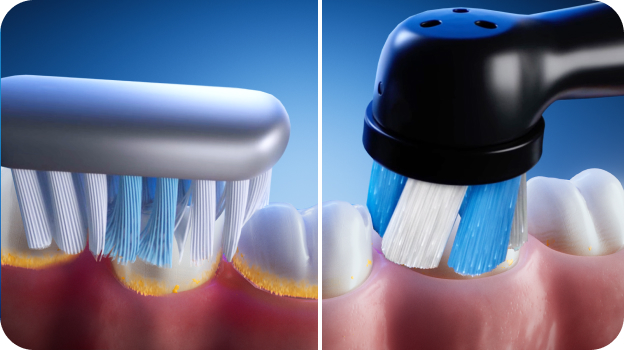
The Modified Bass Technique involves positioning the toothbrush at a 45-degree angle to the tooth surface — tilting it down for the lower jaw and upward for the upper jaw, as if you are attempting to gently edge the bristles below the gum line.
Using this angle, you then make small, vibratory movements back and forth along the gum line to effectively remove plaque and debris.
Rolling Technique
The Rolling Technique requires you to place your toothbrush at a 45-degree angle to your gum line and, using your wrist, roll the brush down and away from your gums.
The Bass technique is superior to the Roll method in cleaning the tooth tissue adjacent to the gingival tissue on the lingual and facial aspects, but no significant differences are found in the overall effectiveness.
Stillman Technique
Similar to the Rolling Technique, the Stillman Technique places your toothbrush at a 45-degree angle to the gum line, partially on the tooth and partially on the gums.
However, for this technique, you brush with a vibrating motion and follow with a rolling motion to push plaque down and away. This method is sometimes suggested for people who have gum recession, as it stimulates the blood flow and helps heal inflamed tissue.
Fones Method
The Fones Method is a quicker technique for brushing teeth, which is popular for children. With this technique, you’ll brush with gentle, circular motions 4-5 times over a set of teeth, not a particular angle.
Charter Technique
The Charter method was designed specifically for people with spaces between their teeth or who have exposed root surfaces. This technique is great for people with braces or partial dentures.
Angle your toothbrush 45 degrees and place it at the gum line, pointing toward the chewing surface of your teeth.