These days, you may feel overwhelmed by the types of toothpastes available at your grocery store or pharmacy. Just remember, the best toothpaste for you is the one you like well enough to use every day
Read more
Preventing gingivitis is essential to oral health. Oral-B® Electric Toothbrushes are one of the most effective tools you can use to help keep your gums healthy. Learn more about the best electric toothbrush for gum health.
Read more
Cleaning teeth regularly is especially important for people with diabetes because they often suffer from dry mouth, or xerostomia. Chronic dry mouth can lead to tooth decay because there's not enough saliva to wash away food particles and bacteria, and to buffer the acid that causes decay.
Read more
Once upon a time, toothpaste just tasted like, well, toothpaste. For many years, the only flavor choices were mint, and perhaps peppermint or spearmint.
Read more
There is some anecdotal evidence that using hydrogen peroxide as a mouthwash when diluted by at least 50 percent water can help whiten your teeth. But for safety’s sake, it’s best to avoid “do-it-yourself” mouthwashes as a tooth-whitening strategy.
Read more
Flossing is a vital part of maintaining good oral hygiene. In tandem with brushing, it helps prevent cavities, gum disease, and bad breath, and can even contribute to overall health. But doing it properly and thoroughly is important. By following the proper technique and incorporating flossing into your daily routine, you can enjoy a healthier smile and better well-being.
Read more
From the nickel in the button on your jeans to the herbal products in your expensive moisturizer, virtually any product that you use has the potential to cause an allergic reaction. But toothpaste ingredients should be low on your list of potential allergens.
Read more
Fluoride helps prevent tooth decay by slowing the breakdown of enamel and increasing the rate of the remineralization process. The new enamel crystals that form are harder, larger and more resistant to acid. Tooth enamel is hard yet porous. Plaque on the surface of your teeth can produce acids that seep into the pores (rods) of the enamel and break down its internal structure. This process, called demineralization, can create a weak spot in the tooth that may become a cavity if left untreated. Learning what fluoride does for the health of your teeth will help you become more aware of how to identify plaque and prevent it from becoming a cavity.
Read more
Need another reason to floss your teeth at least once a day? Flossing daily helps improve bad breath by effectively removing the food particles and bacteria that contribute to it. That makes flossing one of the easiest ways to prevent and banish bad breath. Bad breath, also known as halitosis, is more co
Read more
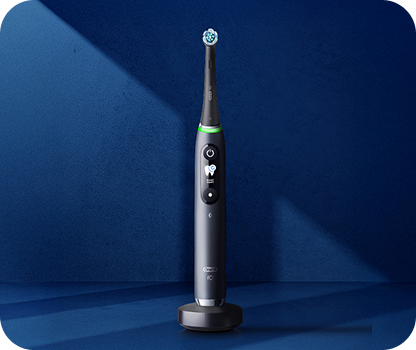
Research has shown that brushing with an electric toothbrush, like the Oral-B iO Series 2, can maintain gum health and prevent tooth loss. Plus, it delivers a perfect clean in just 1 touch thanks to its Super Sensitive mode and Smart Pressure Sensor—both designed to guarantee gum protection.
Read more
Flossing is one of those daily tasks that feels optional, so oftentimes it gets skipped. But that thin string does some big things. It gets to places your toothbrush can't, lifting out plaque and food bits hiding between teeth and along the gum line. Consistent flossing keeps your gums healthy and might even protect your heart. Once you get the hang of it, flossing will be a few simple minutes of your daily routine to protect your teeth and health. So, let’s learn the right way to floss, common mistakes, and helpful tools so you can make flossing an easy habit you’ll never skip.
Read more
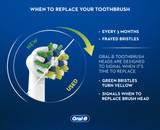
How Often Should You Change Your Toothbrush or Electric Toothbrush Head? Many dental professionals recommend changing your toothbrush about every three months, and the American Dental Association (ADA) recommends that you replace your toothbrush approximately every three to four months, or sooner if the bristles are frayed. Find out more about ADA accepted and recognized electric toothbrushes
Read more
Learning how to brush your teeth properly is the first step to maintaining healthy teeth and gums by removing food particles, plaque, and tartar from the surfaces of your teeth. Plus, it helps minimize the risk of tooth decay and gum disease, the major causes of tooth loss.
Read more
Many dental professionals believe that twice-daily brushing with a fluoride toothpaste provides enough fluoride for cavity protection. But if you're prone to cavities, you can use a fluoride mouthwash in addition to brushing and flossing your teeth.
Read more
One of the key things you'll need to know when considering which type of mouthwash to use for your oral care routine is the differences between them.
Read more
When you use a fluoride toothpaste, you’re strengthening your tooth enamel, which helps to prevent tooth decay. Fluoride can also help repair teeth that have suffered minor tooth decalcification (first step in the breakdown of the tooth surface). You can also get fluoride from fluoridated tap water. But many scientific studies over decades have shown that fluoride toothpaste helps keep cavities at bay, and that regular brushing with a fluoride toothpaste is a reliable way to promote oral health. For people over the age of six, using a fluoride toothpaste is a good idea. It may also be a good idea for younger patients if they are at a high risk for cavities.
Read more
When used regularly, a whitening toothpaste can help remove stains and plaque and contribute to a healthy smile. In fact, they are specially formulated to remove surface stains from natural teeth. They usually contain mild abrasives, such as hydrated silica, or chemicals with stain-dissolving properties, such as sodium hexametaphosphate.
Read more
Brushing properly is the #1 way to prevent cavities. Oral-B® Electric Toothbrushes help make your brushing technique significantly more effective—resulting in fewer opportunities for tooth decay. Read on to learn how Oral-B technology helps you in the fight against cavities.
Read more
Using the right toothbrush can make your daily oral care routine more enjoyable—and more effective. A toothbrush is personal, which is why they’re available in a variety of sizes and shapes. If you have a large mouth, you may prefer a full-sized toothbrush head. If you have a small mouth, opt for a compact head. And some adults even prefer youth or child-sized toothbrushes because they find them easier to use for brushing behind the back teeth.
Read more
With so many toothbrush types available on the market, it's often difficult to select the right toothbrush for your own needs. First, let's distinguish between battery-powered and electric toothbrushes.
Read more