
Halitosis (Bad Breath): Causes, Treatments, and Prevention

Summary
In this article, we discuss causes, symptoms, and treatments for bad breath, and how to address it as part of your oral health routine.
Key Takeaways
- Takeaway #1: The main cause of bad breath, or halitosis, is the activity of bacteria in your mouth, particularly on the tongue and below the gumline. These bacteria break down food particles and dead cells, releasing foul-smelling gases.
- Takeaway #2: Other causes of bad breath include stress, tobacco use, diet, dry mouth, and certain systemic medical conditions.
- Takeaway #3: To treat and prevent bad breath, brush your teeth at least twice a day, floss once a day, rinse with an antibacterial mouthwash, and brush your tongue. Additional lifestyle changes can also help — such as limiting caffeinated and alcoholic drinks, chewing sugarless gum, quitting smoking, and adjusting your diet.
Table of Contents
Key Takeaways
What Is Halitosis?
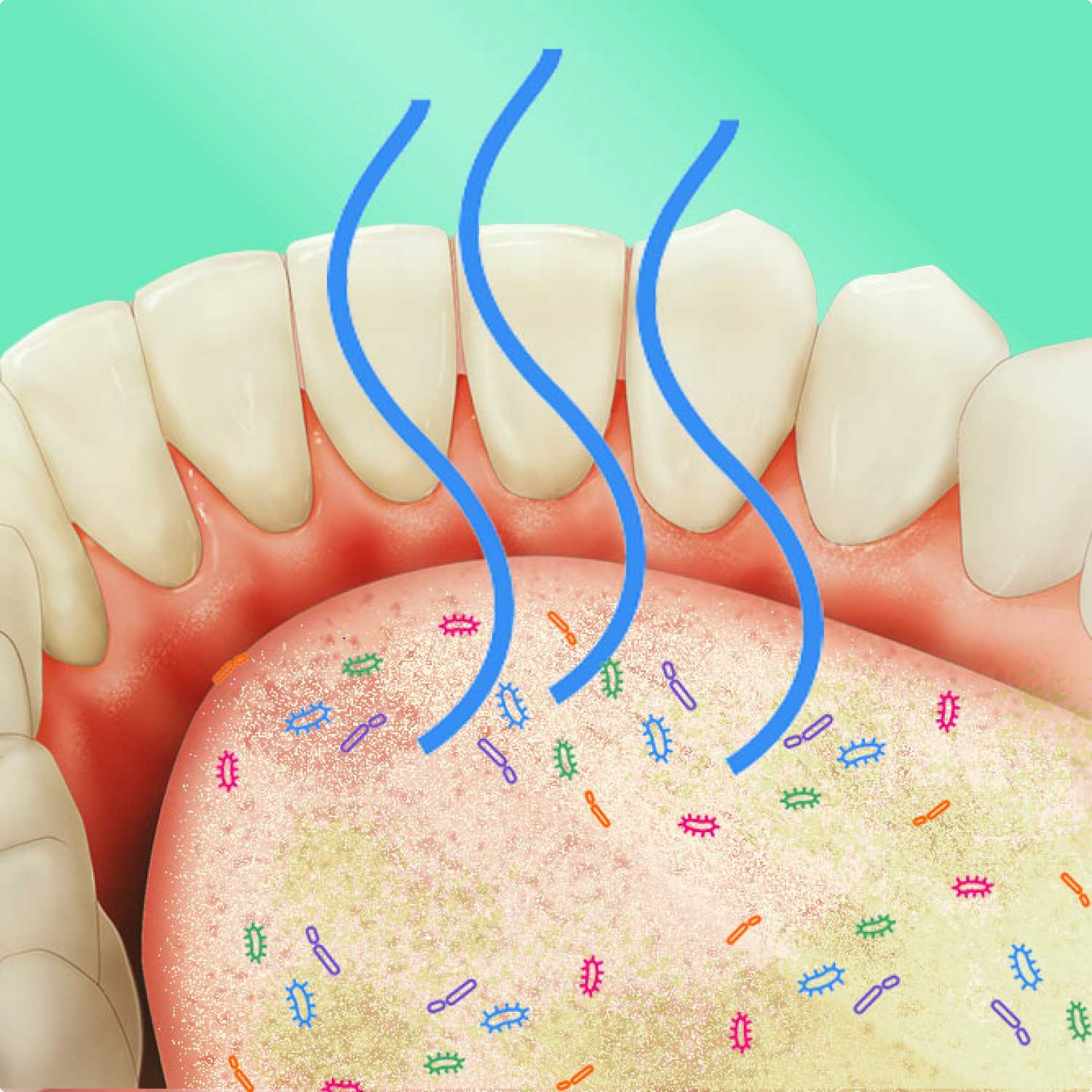
Bad breath, or halitosis, is primarily caused by bacteria that builds up in your mouth. These bacteria feed on food particles, dead cells, and proteins left in your mouth, releasing foul-smelling gases as they grow. The bacteria also form plaque, a sticky film on your teeth, which can eventually harden into tartar if not regularly removed.
Fortunately, once you know what's causing your bad breath, you can take steps to effectively treat and prevent it.
Causes of Bad Breath
Poor Oral Hygiene
Poor brushing and flossing habits let bacteria build up—especially around the gum line and on the back of your tongue. If you don›t remove it daily, that buildup can lead to plaque, tartar, and bad breath.
Overnight Bacteria Accumulation
You brushed your teeth before bed, so why do you wake up with bad breath? Overnight, bacteria build up on your teeth, gums, and tongue. These bacteria feed on amino acids found in leftover food particles in your mouth, releasing sulfur compounds that cause unpleasant morning breath.
Dry Mouth
Saliva helps prevent bad breath by removing debris and particles left behind by food. If your body doesn't produce enough saliva—even if you're well-hydrated—you may have a condition called dry mouth. Dry mouth may be caused by certain medications or systemic medical conditions.
Symptoms include:
- Stickiness in your mouth
- Thick saliva
- Difficulty chewing and swallowing
- Burning or tingling in your mouth
- Dry lips
If you think you might suffer from dry mouth, talk to a doctor or dentist about possible treatments.
Tobacco Use
Smoking and chewing tobacco impair your body's ability to fight infection, reduce blood flow to your gums, and hinder tissue repair. Tobacco use makes it much harder for your body to fight off the bacteria and plaque buildup that lead to halitosis.
Diet
Certain foods (such as garlic, onions, and some spices) cause temporary bad breath. Brushing your teeth or rinsing with mouthwash can help temporarily, but the smell usually lingers until the food fully passes through your system.
Stress
Stress can lead to natural and lifestyle issues that cause bad breath. For example, your body releases stress hormones (i.e., cortisol, adrenaline, and noradrenaline) which can slow saliva production.
Without saliva to moisten your mouth, tongue, and teeth, food particles and bacteria can more easily build up and cause halitosis.
Certain Dental or Medical Problems
On rare occasions, bad breath can be a sign of more serious conditions, like gum disease, gum abscesses, gingivitis, periodontitis, diabetes, and liver or kidney disease.
Bad Breath Treatment and Prevention

Once you know what's causing your bad breath, you can tackle the problem and keep it from coming back! Here are some of the top tips for treating and preventing halitosis.
Brush Your Teeth At least Twice a Day
The best treatment for bad breath caused by bacteria and plaque on your teeth is to brush with a stannous fluoride toothpaste and an electric toothbrush twice a day.
Floss Once a Day
To get rid of as much food, plaque, and bacteria in your teeth as possible, floss once a day with string floss or a floss pick.
Rinse with an Antibacterial Mouthwash
Use an antibacterial mouthwash to remove bacteria in those spaces where your toothbrush and floss are unable to reach.
Brush Your Tongue
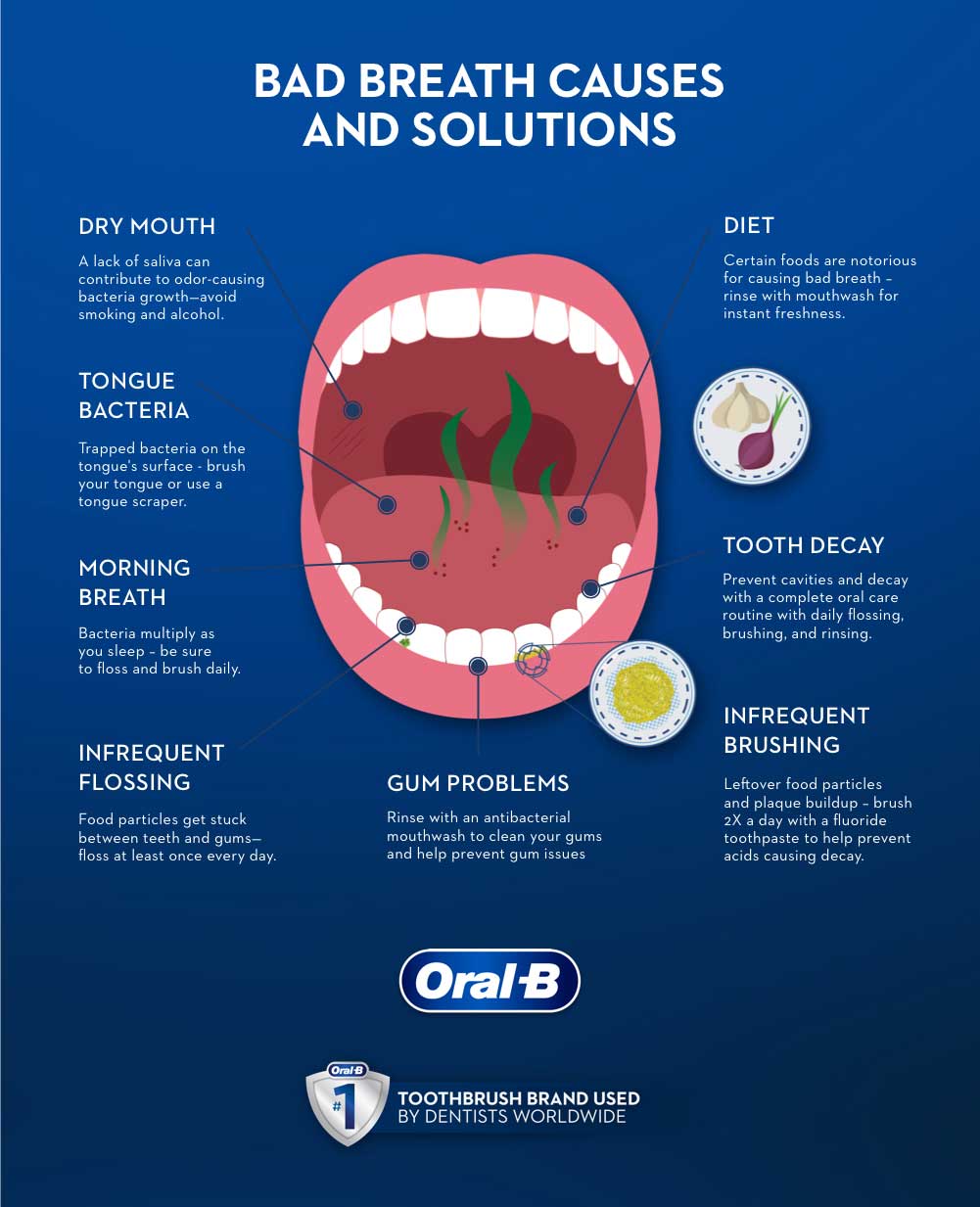
When you're done brushing your teeth, take a few moments to brush your tongue — especially the back. The rough surface of your tongue has many nooks and crannies where odor-causing bacteria can accumulate, making it a key area to clean.
Visit Your Dentist Twice a Year
Minimize bacteria, plaque, and tartar buildup — as well as a long list of other dental issues — by visiting your dentist at least twice a year.
Professional cleaning and examination will often prevent bad breath from coming back and ward off more serious dental issues, like cavities, gum disease, and periodontitis.
Limit Caffeinated and Alcoholic Drinks
To treat bad breath and help prevent it from coming back, limit caffeinated and alcoholic drinks, as well as sugary and acidic juices. Bacteria thrive on sugar, acid, and other chemicals. Think of these drinks as fuel for the bacteria that cause bad breath and plaque.
Chew Sugarless Gum
Chewing sugarless gum is an excellent way to stimulate saliva production and keep your mouth moist (both of which help your body remove the bacteria and plaque that cause bad breath).
Though mints can freshen your breath, they can leave a sugary residue behind on your teeth.
Quit Smoking
If you smoke, quit. It's just that simple. Tobacco damages gum tissue and feeds the bacteria that cause halitosis.
If you're having trouble quitting on your own, talk to your doctor about possible options to help you stop smoking.
Change Your Diet
Since certain foods can cause halitosis, an effective treatment is to make changes to your diet.
Not sure where to begin? Start with these suggestions:
- Limit garlic, onions, and other strong-smelling foods
- Limit sugary, starchy foods and sugary drinks
- Increase your consumption of fruits and vegetables, as they help clean your mouth and promote saliva production
When to See a Dentist

Bad breath may indicate an issue somewhere else in your body. If you have chronic bad breath and your dental professional rules out any oral problems, see your primary care physician for an evaluation.
Bad breath can be a sign of a range of conditions, including respiratory tract infections, chronic sinusitis or bronchitis, diabetes, or liver and kidney problems. It's important not to ignore the problem.
Overcome Bad Breath with Oral-B!

The best way to fight the bacteria that causes bad breath is with a strong oral hygiene routine and the right tools.
The Oral-B iO Electric Toothbrush Series removes up to 100% more plaque than a regular manual toothbrush to give you that professional clean feeling, every single day.
With its interactive color display, smart modes, and pressure sensor, the iO Series helps prevent plaque buildup, bad breath, and tartar formation.
This electric brush—combined with a stannous fluoride toothpaste like Crest Pro-Health, an antibacterial mouthwash like Crest Pro-Rinse, and a good flossing routine using Oral-B Glide floss—is a powerful way to support fresher breath and better oral health.
FAQs
-
What is the fastest way to cure halitosis?
-
What does halitosis smell like?
-
How do you fix halitosis?
-
What is halitosis caused by?
-
How to get rid of bad breath?
Sources
- https://my.clevelandclinic.org/health/diseases/17771-bad-breath-halitosis
- https://www.mayoclinic.org/diseases-conditions/bad-breath/symptoms-causes/syc-20350922
- https://www.hopkinsmedicine.org/health/conditions-and-diseases/halitosis-bad-breath
- https://www.health.harvard.edu/staying-healthy/halitosis-common-causes-effective-treatments-and-powerful-prevention-for-bad-breath
- Adam, R. E., et al. (2025). A randomized clinical trial evaluating plaque and gingivitis effects of an entry-tier oscillating-rotating electric toothbrush. Journal of Dental Hygiene, 99(5), 6–17. https://jdh.adha.org/content/99/5/6
- Cheng, R., et al. (2014). Breath and plaque prevention with cetylpyridinium chloride rinses: clinical meta-analysis. Journal of Dental Research, 93, 573. https://iadr.abstractarchives.com/abstract/43am-185497/breath-and-plaque-prevention-with-cetylpyridinium-chloride-rinses-clinical-meta-analysis
- Zsiska, M., et al. (2021). Investigation of oral malodor prevention by dentifrices as measured by VSC reduction. Journal of breath research, 15(3), 10.1088/1752-7163/abf209. https://doi.org/10.1088/1752-7163/abf209
Table of Contents
- What Is Halitosis?
- Causes of Bad Breath
- Bad Breath Treatment and Prevention
- When to See a Dentist
-
- FAQs
- Sources

Sign Up
for oral care tips, expert advise, and exclusive offers.
Related Articles


Sign Up
for oral care tips, expert advise, and exclusive offers.