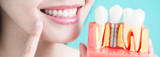
The bone in our jaw can weaken and diminish through gum disease, dental trauma, and tooth extraction. Dental bone grafts are a procedure that replaces lost and missing bone in the jaw, restoring the health of the area.
Read more
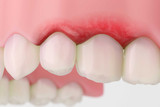
Trench mouth is a serious form of gum disease caused by the buildup of harmful bacteria in the mouth. Trench mouth can cause bleeding and swollen gums, ulcers, and mouth lesions. If left untreated, it can destroy gum tissue and potentially affect the underlying jawbone.
Read more
Dental curettage is a procedure that removes infected soft tissue from within the gum pocket. It is often performed along with scaling and root planing (sometimes called a "deep cleaning"), a procedure that removes plaque and tartar from the tooth and root surfaces. The procedure aims to promote gum health by removing tissue affected by diseases like periodontitis and gingivitis.
Read more
If your gums are swollen around one tooth, you're probably wondering why. Is there an underlying condition causing the swelling?
Read more
Gum cysts are common, usually harmless, fluid-filled sacs that can form on the soft tissues inside your mouth. They are often caused by minor trauma or blockage of the salivary glands. Most cysts resolve on their own, but if a cyst is large, persistent, or causing discomfort, treatment options are available. Consult with a dentist if you have concerns or if the cyst interferes with your daily activities. Treatments such as cryotherapy, laser therapy, or surgical removal may be considered.
Read more
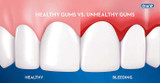
Gums bleeding when brushing can happen to any of us. When they do, it shouldn’t be ignored. Bleeding gums can be caused by several things, some of them relatively minor such as brushing too vigorously or vitamin deficiency. But they can also indicate something more serious, such as gum disease or even tooth loss. So, when your gums bleed, it’s crucial to not ignore it and consult your dentist as soon as you can.
Read more
Your gum health is just as important as maintaining clean teeth and regular flossing. Aggressive brushing, underlying gum disease, or even genetics can lead to gum recession. If this occurs, your dentist may recommend a gum graft to correct the issue. While the risk of gum recession can increase with age, it can affect adults of any age, making gum grafts a potential procedure for a wide range of individuals.
Read more
Gum disease can be prevented by taking care of your teeth and with proper oral care. Gingivitis and periodontitis are conditions of gum disease and monitoring your gum health can prevent bigger dental issues. Gingivitis can be reversed and reduced with proper oral hygiene, yet periodontitis can’t be fully reversed and can lead to other serious conditions. If you notice your gums appear swollen, irritated or red consult your dentist or dental hygienist immediately.
Read more
Periodontal maintenance is a prescribed cleaning procedure for people with a history of periodontitis (gum disease) who have already completed the initial active phase of treatment, such as scaling and root planing. It goes beyond preventative care and is a prescribed treatment by a dentist that is more in-depth than a routine cleaning. It uses deep cleaning to remove plaque and tartar buildup below the gum line and is typically recommended every 3-4 months to prevent gum disease progression.
Read more
Swollen gums should be seen and diagnosed by a dentist or dental hygienist as it can lead to bigger dental issues such as gum disease. Taking care of your oral hygiene and brushing your teeth with an electric toothbrush can help treat swollen gums. Your dentist or dental hygienist may also recommend a deep dental cleaning to help reverse the swollen gums.
Read more
Gum boils are bumps on your gums that look similar to pimples. In this guide, we’ll discuss gum boils, what causes gum boils, the symptoms you may experience, and available treatment options.
Read more
If you experience pain in the gum area, visible swelling, or a pus-filled pocket on the gum, you may have a gum abscess. In this article, we’ll discuss symptoms, causes, and treatments for this serious dental issue so you can get your smile back.
Read more
If you experience swelling or bleeding from your gums, you may have gingivitis, and it’s recommended that you have this checked by a dentist. In the meantime, you can implement a gingivitis self-care routine to treat the condition on your own and prevent more complicated oral health issues.
Read more
When you think about your dental health, your mind probably goes right to your teeth. However, there’s another important part of the equation: your gums. Your teeth might be straight and cavity-free, but how do you know you have healthy gums?
Read more
Lorem ipsum dolor sit amet, consectetur adipiscing elit. Sed do eiusmod tempor incididunt ut labore et dolore magna aliqua.
Read more
Even if they brush and floss regularly, some people can start losing their teeth. How can that be? Well, one little-known culprit is bone loss in the jaw and gums. It doesn’t always appear overnight, but over time it can lead to loose teeth, gum problems, and even changes in your face shape. But it’s not all bad news. If you catch it early, there are plenty of ways to manage and halt the progression of the damage. Let’s break down what causes bone loss, how to spot it, and what you can do about it, before it starts affecting your mouth and your smile.
Read more
Burning Mouth Syndrome Bothersome burning sensations in the mouth are common and can be associated with many illnesses when they appear along with other symptoms. However, up to 15% of elderly patients may experience a burning sensation in the mouth despite the absence of other visible symptoms. This condition is categorized as stomatodynia or Burning Mouth Syndrome
Read more
If your gums bleed when you floss, it's often a sign that your gums, and perhaps your oral hygiene, need a little extra care and attention. While occasional bleeding isn't uncommon, frequent or persistent bleeding should be taken seriously. Understanding the causes of bleeding gums, which can range from improper flossing to early gum disease, and how to address them, can help you maintain healthy gums and a happy smile.
Read more
Tooth pain can be caused by a dental problem, such as a cavity or gum disease, or by a non-dental problem like a sinus infection. Some dental pain is caused by stress – if you’re stressed to the point of clenching your jaw and grinding your teeth, you can develop pain associated with the temporomandibular joint (TMJ). The TMJ is the joint that hinges the lower jaw to the skull, enabling you to open and close your mouth.
Read more
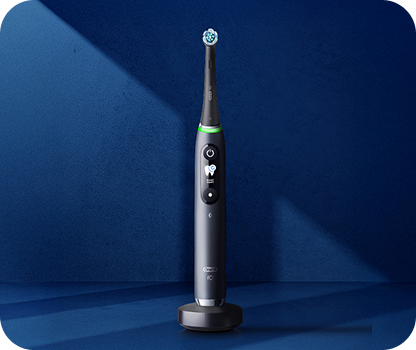
Gum disease occurs due to long term bacterial growth in the mouth and can lead to gum deterioration and loosening teeth. Prevention through a thorough oral care routine is the best way to protect your gums and keep your mouth healthy. To remove more of the plaque bacteria that contribute to gum disease, brush twice daily with an electric toothbrush. The Oral-B iO2 adapts to each of your unique teeth to thoroughly sweep away more plaque bacteria from the gumline.
Read more
Since your gums are the foundation of a healthy mouth, it's crucial to continue to pay attention to the state of your gum line. To better assist in ensuring you don't experience gum issues, try rinsing with a non-alcoholic mouthwash to better protect your gum line and reinforce your overall clean.
Read more
Since your gums are the foundation of a healthy mouth, it's crucial to continue to pay attention to the state of your gum line. To better assist in ensuring you don't experience gum issues, try rinsing with a non-alcoholic mouthwash to better protect your gum line and reinforce your overall clean.
Read more
If you or someone you know has kidney disease, don’t neglect your dental health. Kidney disease is associated with many dental health complications, including increased risk of periodontal disease, tooth loss, and inflammation of the salivary glands. So, it’s important to maintain a consistent oral health routine, including regular dental visits.
Read more
Lorem ipsum dolor sit amet, consectetur adipiscing elit. Sed do eiusmod tempor incididunt ut labore et dolore magna aliqua.
Read more
Adult, or permanent teeth, are designed to last a lifetime. Which is why losing a tooth can be alarming. Fortunately, applying a few early prevention techniques can help keep your teeth from falling out so you can show off a healthier, more resilient smile.
Read more
Gum disease ranges from mild to severe. If left untreated, certain forms of gum problems can increase your risk of developing other health concerns such as diabetes and heart issues. Reinforce your gum health by brushing with an electric toothbrush. Unlike a manual toothbrush, and electric toothbrush like the Oral-B iO Series delivers 100% cleaner teeth and healthier gums.
Read more
Losing your teeth is never a good sign; fortunately, there are measures you can take to ensure you retain more of your natural teeth. Understanding what leads to teeth falling out can help prevent tooth loss in the future so you can showcase a healthier, stronger smile.
Read more
Periodontitis is a severe gum infection (also known as gum disease or periodontal disease) that causes irreversible damage and loss of the soft tissue and bone that support your teeth. Thankfully, periodontitis is preventable with the right oral hygiene routine and regular dental visits.
Read more
Gum surgery can sound intimidating and even a little scary, but it's often necessary to restore your smile and protect your oral health. Whether you're dealing with gum recession, advanced gum disease, or aesthetic concerns that affect your appearance, understanding the different types of gum surgeries available, what to expect during a procedure, and how to care for yourself afterward can help you feel more prepared and ready to smile again with renewed confidence.
Read more
Eating a variety of nutritious food is good for your overall health, including your oral health. Some vitamins in particular have demonstrated benefits to building healthy teeth and gums, namely calcium and vitamin C, so be sure to include foods rich in these nutrients in your diet.
Read more
Preventing gingivitis is essential to oral health. Oral-B® Electric Toothbrushes are one of the most effective tools you can use to help keep your gums healthy. Learn more about the best electric toothbrush for gum health.
Read more
Research has shown that brushing with an electric toothbrush, like the Oral-B iO Series 2, can maintain gum health and prevent tooth loss. Plus, it delivers a perfect clean in just 1 touch thanks to its Super Sensitive mode and Smart Pressure Sensor—both designed to guarantee gum protection.
Read more
Receding gums is a dental condition that happens when gum tissue recedes from the teeth, exposing the roots underneath. Taking good care of your mouth is the best way to keep your gums healthy and prevent gum recession.
Read more
"Bleeding gums" or Gingival bleeding is one of the earliest signs of gum disease. Gingival bleeding can arise from various underlying factors, and in this article, we'll discuss some of the most prevalent causes.
Read more
Gingivitis is the first stage of gum disease. Fortunately, gingivitis is often treatable and preventable with just a few simple steps that you can do at home.
Read more