Dr. Stephanie Gans is a general dentist with more than a decade of experience in the industry.
Prior to joining Procter & Gamble in the Fall of 2018, she practiced dentistry in her hometown of Cleveland, Ohio. In her current role as Senior Scientist: Professional and Scientific Relations Manager for Crest + Oral-B, Stephanie aims to empower other dental professionals with recent advances in paste and power brushing technology to achieve her goal of improved oral health for all.
Dr. Gans has reviewed this article for accuracy.
Contents
Summary
The Evolution of Toothbrushing
The Problem: Are You Really Brushing Effectively?
Manual Toothbrushing: Relying on Technique Alone
Electric Toothbrushes: A Technology Advantage
Oral-B iO: Smart Technology for Plaque Removal and Gum Health
Your Personalized Guide: AI Toothbrush Technology and 3D Teeth Tracking
The Crest + Oral-B System
Long-Term Benefits: Protecting Your Gums
Which Oral-B iO Is Right for You?
Oral Care Habits That Support Gum Health
Conclusion: A Future of Smarter Oral Care
FAQs
Sources
Key takeaways
1
Manual brushing can leave plaque behind: Manual toothbrushes can leave plaque behind, due in part to inconsistent coverage and insufficient brushing time. Poor plaque control can contribute to gingivitis.
2
Oral-B iO is backed by clinical research: The Oral-B iO electric toothbrush, with oscillating-rotating motion and gentle microvibrations, has been evaluated in published clinical studies. A meta-analysis of clinical studies found that 88% of Oral-B iO users with early gum disease transitioned to healthy gums by 12 weeks.
3
Electric toothbrushes can improve plaque removal and gum health: Clinical research shows that electric toothbrushes can help reduce plaque and gingivitis more effectively than manual brushing. More recent evidence suggests oscillating-rotating toothbrush technology ranks highly among electric toothbrush technologies for helping reduce plaque and support gum health.
4
3D Teeth Tracking helps guide brushing coverage: Oral-B iO’s advanced 3D Teeth Tracking provides real-time feedback and maps brushing coverage across up to 16 zones of the mouth to help identify areas that may need more attention.
5
Smart Pressure Sensor helps support gentle brushing: The Smart Pressure Sensor indicates when too much force is being applied and helps guide users toward the right amount of pressure for effective plaque removal.
6
100% of participants reached healthy gums in a 12-week Crest + Oral-B System study: Participants with early gum disease used the full Crest + Oral-B System, including an Oral-B iO electric toothbrush, Crest stannous fluoride toothpaste, Crest CPC oral rinse, and Oral-B Glide floss, and transitioned to a healthy gum state.
7
Oral-B iO supports long-term gum care: Oral-B iO technology is designed to be gentle on gums and has been shown in a long-term clinical study to help stabilize gum recession over time.
Summary
Modern toothbrushes are more than just bristles and a handle. Smart toothbrushes, including the Oral-B iO, use features like pressure sensors, timers, app-connected coaching, and 3D Teeth Tracking to help guide brushing technique, coverage, and pressure. This connected toothbrush experience can help personalize daily brushing through real-time feedback and a toothbrush app. These features can support plaque removal and gum health when used as directed.
The Evolution of Toothbrushing
From early cleaning tools to modern toothbrushes, oral care has continued to evolve. Today, smart toothbrush and AI toothbrush technology can help guide brushing time, pressure, and coverage, while the goal remains the same: remove plaque and support gum health.
As toothbrushes become more connected and personalized, they can help people build better daily brushing habits.
The Problem: Are You Really Brushing Effectively?
Even with years of dental advice, many people still struggle to brush effectively. In a systematic review, manual toothbrushes left an average of 58% of plaque behind after brushing.2 Common brushing challenges include:
Inconsistent coverage: Missing areas, especially back molars or the tongue side of front teeth.
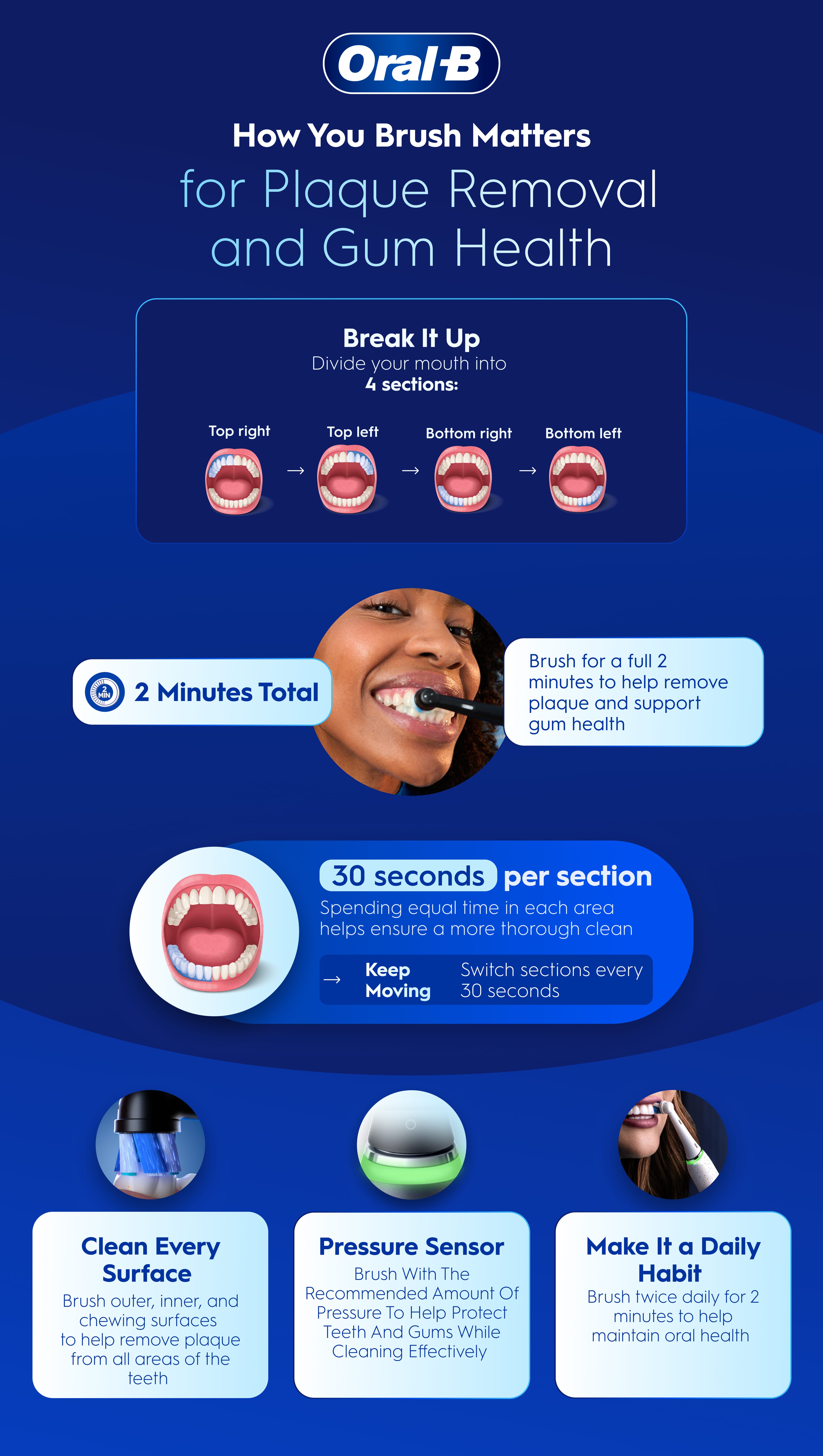
Insufficient brushing time: Brushing for less than the dentist-recommended two minutes.
Too much pressure: Brushing too hard, which can be tough on gums.
Manual Toothbrushing: Relying on Technique Alone
Manual toothbrushes depend heavily on user technique, including brushing angle, coverage, pressure, and brushing time. Without real-time feedback, it can be difficult to clean consistently.
In a meta-analysis of clinical studies, only 21% of manual toothbrush users with early gum disease transitioned to healthy gums by 12 weeks, compared with 88% of Oral-B iO users.
Electric Toothbrushes: A Technology Advantage
Electric toothbrushes can help improve plaque removal and support gum health. A Cochrane review of 56 studies found that electric toothbrushes reduced plaque and gingivitis more effectively than manual toothbrushes in the short and long term.
More recent clinical evidence found that oscillating-rotating electric toothbrushes ranked highest among the toothbrush technologies studied for reducing plaque and gingivitis, ahead of sonic and manual toothbrushes.
Many electric toothbrushes also include features such as pressure sensors, two-minute timers, and quadrant pacing timers to help support better brushing habits.
Oral-B iO: Smart Technology for Plaque Removal and Gum Health
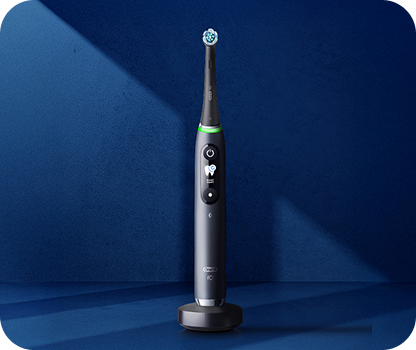
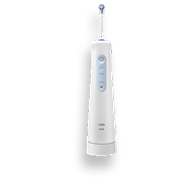
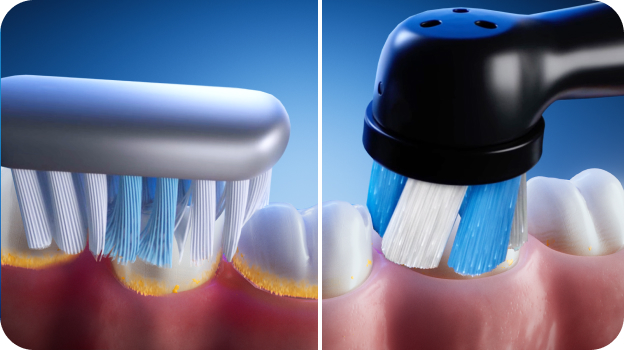
The Oral-B iO combines oscillating-rotating technology with gentle microvibrations to help deliver a thorough brushing experience
Clinical evidence supports oscillating-rotating technology for helping reduce plaque and gingivitis, and recent evidence suggests it ranks highly among compared electric toothbrush technologies.
Key features available on advanced Oral-B iO models include:
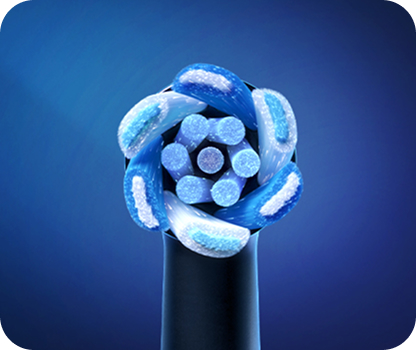
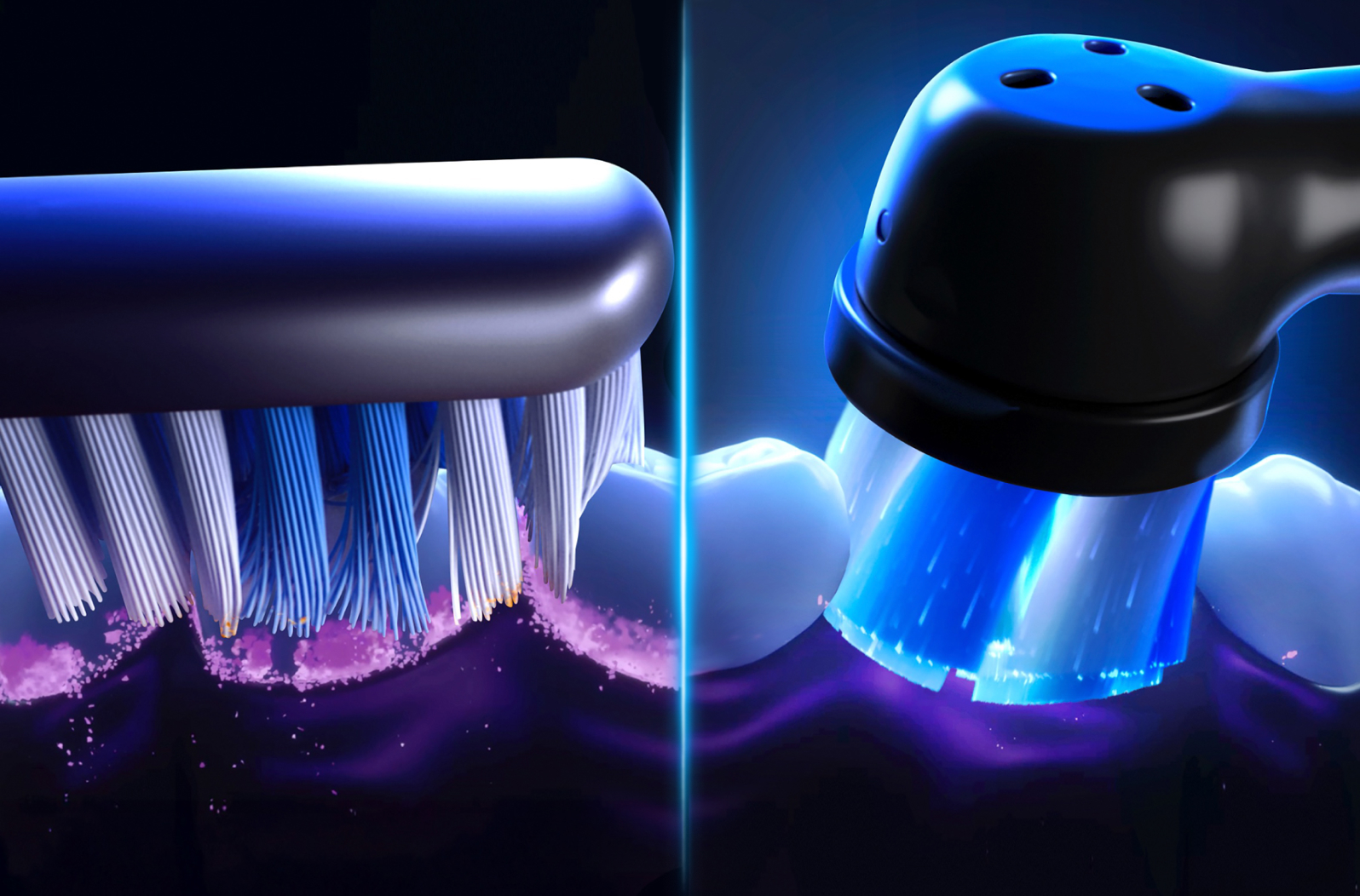
Round brush head for a tooth-by-tooth clean: Oral-B’s dentist-inspired round brush head is designed to surround each tooth, while oscillating-rotating motion and gentle microvibrations help deliver a thorough clean.
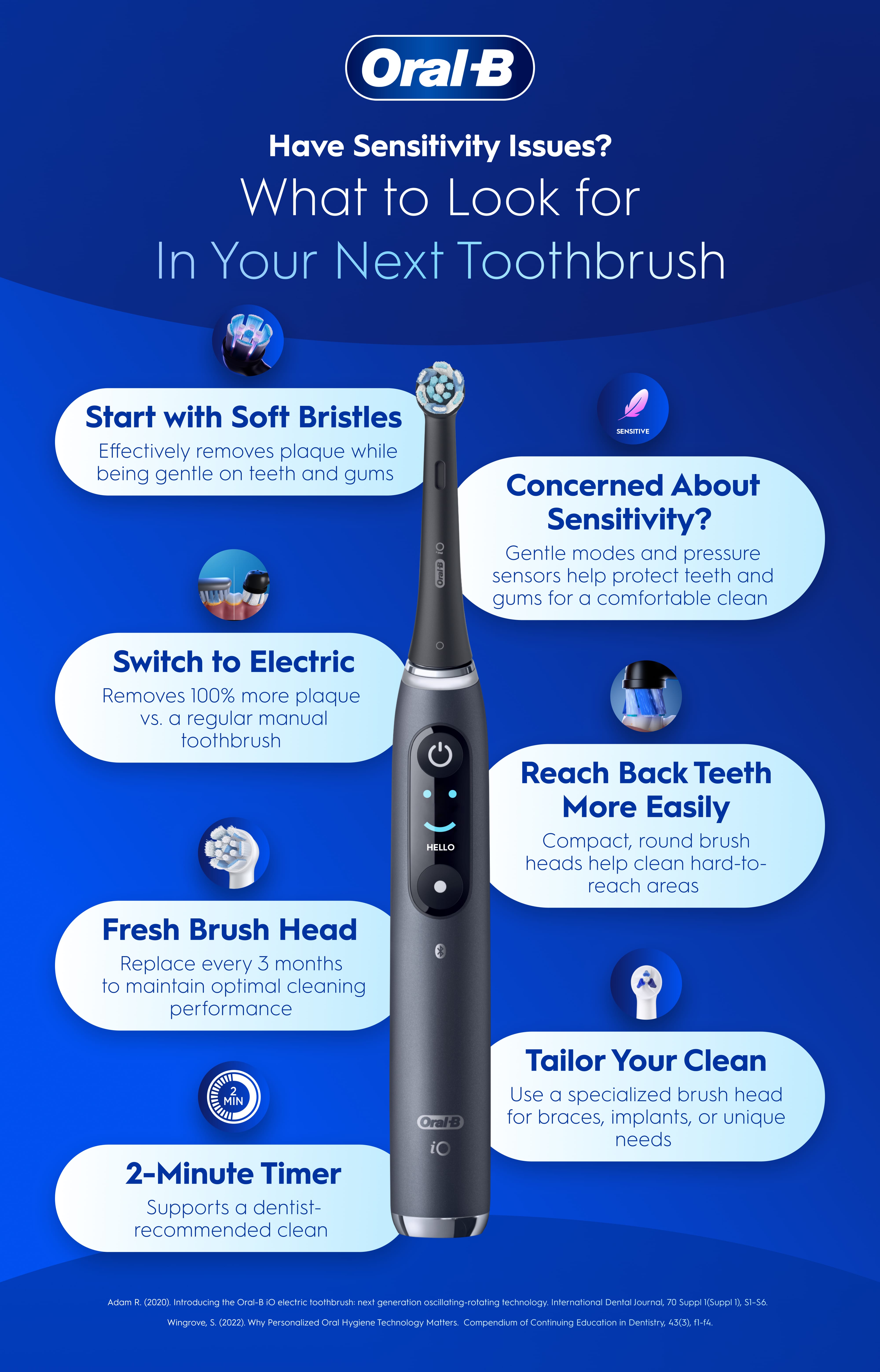
Smart Pressure Sensor: Shows you when you’re brushing too hard, not hard enough, or just right, helping guide you toward the right pressure for effective plaque removal.
Clinically studied gum-health results: A meta-analysis published in the International Dental Journal found that 88% of Oral-B iO users with early gum disease transitioned to healthy gums by 12 weeks, compared with 21% of manual toothbrush users and 54% of sonic toothbrush users.
Feature
Benefit
Smart Pressure Sensor
Shows you when you’re brushing too hard, not hard enough, or just right, helping guide you toward the right pressure.
3D Teeth Tracking
Helps map brushing coverage and identify areas that may need more attention.
Timer
Helps you brush for the dentist-recommended two minutes.
Round Brush Head with Oscillating-Rotating Technology
Surrounds each tooth while oscillating-rotating motion helps deliver a tooth-by-tooth clean.
Microvibrations
Helps provide a gentle, effective cleaning experience.
Your Personalized Guide: AI Toothbrush Technology and 3D Teeth Tracking
AI toothbrush technology can help make daily brushing feel more personalized by using connected features, real-time feedback, and app-guided coaching to help users understand where, how long, and how effectively they are brushing.
With Oral-B iO, features like 3D Teeth Tracking, the Smart Pressure Sensor, brushing modes, in-app health goals, and a 30-day brushing challenge can help personalize the brushing experience and support better daily habits.
In a global in-market evaluation of more than 16 million brushing sessions, users brushed longer and with less overpressure when using live app feedback, and brushing sessions with position detection achieved 94.4% average coverage.
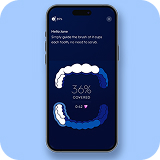
Real-time 3D Teeth Tracking: The app uses advanced 3D Teeth Tracking to map brushing coverage across up to 16 zones, helping users see which areas may need more attention.
Personalized brushing modes: Oral-B iO offers brushing modes such as Daily Clean, Sensitive, Gum Care, Intense, Whitening, Super Sensitive, and Tongue Clean, depending on the model, so users can choose the mode that best fits their brushing needs.
Smart Pressure Sensor feedback: The Smart Pressure Sensor shows when users are brushing too hard, not hard enough, or just right, helping guide them toward the right pressure.
App-guided goals and challenges: The Oral-B app can support personalized brushing through features such as health goals, progress tracking, and a 30-day brushing challenge designed to help users build better brushing habits.
Real-world behavior-change data: In a global real-world evaluation, live app feedback helped users brush longer, use less excessive pressure, and achieve 94.4% average brushing coverage.
The Crest + Oral-B System
Technology isn’t limited to the brush. A complete oral care routine can combine an Oral-B iO electric toothbrush with Crest stannous fluoride toothpaste, Crest CPC oral rinse, and Oral-B Glide floss to support plaque removal and gum health.
100% of participants reached healthy gums in a 12-week Crest + Oral-B System study: In a study published in the Compendium of Continuing Education in Dentistry, participants with early gum disease used the full Crest + Oral-B System, including an Oral-B iO electric toothbrush, Crest stannous fluoride toothpaste, Crest CPC oral rinse, and Oral-B Glide floss, and transitioned to a healthy gum state.
Long-Term Benefits: Protecting Your Gums
Healthy gums are an important part of a healthy smile. Oral-B iO is designed to deliver a powerful yet gentle clean.
In a 36-month clinical study of people with existing gum recession, Oral-B iO helped stabilize gum recession over time compared with a manual toothbrush.
Which Oral-B iO Is Right for You?
Wondering which Oral-B iO toothbrush to choose? Here’s a simple guide to help match the right Oral-B iO model to your brushing needs.
Best for most consumers: Oral-B iO3 models offer the essential iO cleaning experience with a Smart Pressure Sensor and brushing modes to help guide daily brushing.
Best for personalized coaching: Oral-B iO9 models add advanced app-connected features, including 3D Teeth Tracking with A.I., to help users see where they brushed and identify areas that may need more attention.
Best value: Oral-B iO2 models deliver oscillating-rotating cleaning with gentle microvibrations, a pressure sensor, and a two-minute timer, making them a great option for people who want a simple experience or are switching to a power brush for the first time.
Oral Care Habits That Support Gum Health
Smart brushing is one part of a complete oral care routine. Oral-B iO electric toothbrushes can help guide brushing time, pressure, and coverage, while Crest stannous fluoride toothpaste, Crest mouthwash, and daily flossing can help support plaque removal and gum health.
Brush with Oral-B iO electric toothbrushes to help guide brushing pressure and coverage for a more consistent daily clean. In a long-term clinical study, Oral-B iO helped stabilize existing gum recession over time compared with a manual toothbrush.
Choose the right brush head, such as the Oral-B iO Gentle Care brush head, which is designed with soft bristles to provide a gentle cleaning experience along teeth and gums.
Crest Toothpaste with stannous fluoride helps fight plaque bacteria that can contribute to gingivitis. Pairing it with an Oral-B iO electric toothbrush can help support plaque removal and gum health as part of a daily routine.
Add mouthwash, such as Crest Mouthwash, to help support plaque control as part of a complete oral care routine.
Floss daily with a floss that can fit more easily into tight spaces, such as Glide Floss, to help support gum health as part of a complete routine.
Oral health is part of overall health. Taking steps to help reduce plaque, gingivitis, and tooth decay can support a healthier daily routine.
Conclusion: A Future of Smarter Oral Care
Smart brushing tools like Oral-B iO can help make daily oral care more personalized, guided, and consistent. Clinical evidence supports oscillating-rotating technology for helping reduce plaque and gingivitis, and Oral-B iO adds connected features that can help guide brushing habits.
When paired with Crest stannous fluoride formulations, they can support plaque removal, gum health, and better brushing habits.
Shop this article
1222|1493|1489|1502
FAQs
Are electric toothbrushes better than manual toothbrushes?
Electric toothbrushes can help reduce plaque and gingivitis more effectively than manual toothbrushes when used as directed. Many also include features like timers and pressure sensors that help guide brushing habits.
Why does Oral-B remove more plaque?
Oral-B electric toothbrushes use oscillating-rotating technology to help clean tooth by tooth. The round brush head helps surround each tooth and reach along the gumline, where plaque can build up.
What is oscillating-rotating toothbrush technology?
Oscillating-rotating toothbrush technology uses a round brush head that moves back and forth in a rotating motion to help clean tooth by tooth. More recent clinical evidence found that oscillating-rotating electric toothbrushes ranked highest among the toothbrush technologies studied for reducing plaque and gingivitis.
Why are Oral-B round brush heads different?
Oral-B round brush heads are inspired by professional cleaning tools and designed to clean one tooth at a time. Their small, round shape helps bristles reach around each tooth and along the gumline for a more precise clean.
Why do dentists recommend Oral-B?
Dentists often recommend Oral-B because its electric toothbrushes are designed to help people brush more effectively at home. Features like timers, pressure sensors, round brush heads, and brushing modes can help support better brushing habits.
Why does gum health matter?
Healthy gums help support and protect your teeth. Plaque buildup along the gumline can contribute to gingivitis, which may cause redness, swelling, or bleeding, so daily plaque removal is important.
What should I look for when buying an electric toothbrush?
Look for an electric toothbrush with a two-minute timer, a pressure sensor, and a brush head that helps clean along the gumline. If you want more guidance, consider app-connected features or coaching tools that help track brushing coverage and habits.
Which Oral-B electric toothbrush is the best value?
The best value depends on the features you want and how much guidance you need. Oral-B iO2 is a good option for people who want a simple electric toothbrush experience, with oscillating-rotating cleaning, a pressure sensor, and a two-minute timer.
Do I really need a pressure sensor on my toothbrush?
A pressure sensor can be helpful if you tend to brush too hard. It gives feedback while you brush, helping you use a gentler amount of pressure to support gum health.
Is a smart toothbrush with Bluetooth worth it?
A smart toothbrush with Bluetooth may be worth it if you want real-time coaching and progress tracking. App-connected features can help you see where you brushed, identify areas that may need more attention, and build better brushing habits over time.
Sources
1. Adam, R. (2024). New Technologies Shaping the Future of Oral Hygiene. Scientia.
2. Slot, D. E., et al. (2012). The efficacy of manual toothbrushes following a brushing exercise: a systematic review. International Journal of Dental Hygiene, 10(3), 187–197. https://doi.org/10.1111/j.1601-5037.2012.00557.x
3. Zou, Y., et al. (2024). A Meta-analysis Comparing Toothbrush Technologies on Gingivitis and Plaque. International Dental Journal, 74(1), 146–156. https://doi.org/10.1016/j.identj.2023.06.009
4. Yaacob, M., et al. (2014). Powered versus manual toothbrushing for oral health. The Cochrane Database of Systematic Reviews, 2014(6), CD002281. https://doi.org/10.1002/14651858.CD002281.pub3
5. Luo, C., Chen, N., Jing, Q., Hu, S., Wan, S., Zhang, S., Liu, G., Li, N., & Zhao, L.-Y. (2026). Comparative efficacy of electric toothbrush technologies in plaque and gingivitis reduction: a network meta-analysis. Clinical Oral Investigations, 30, 270. https://doi.org/10.1007/s00784-026-06955-z
6. Adam, R., et al. (2021). Anti-gingivitis and Anti-plaque Efficacy of an Oral Hygiene System: Results From a 12-Week Randomized Controlled Trial. Compendium of Continuing Education in Dentistry, 42(9), e1–e4.
7. Sutor, S., et al. (2025). Effect of a powered and a manual toothbrush in subjects susceptible to gingival recession: A 36-month randomized controlled clinical study. International Journal of Dental Hygiene, 23(1), 26–36. https://doi.org/10.1111/idh.12834
8. Thurnay, S., Adam, R., & Meyners, M. (2022). A Global, In-Market Evaluation of Toothbrushing Behaviour and Self-assessed Gingival Bleeding with Use of App Data from an Interactive Electric Toothbrush. Oral Health & Preventive Dentistry, 20, 1–10. https://doi.org/10.3290/j.ohpd.b2572911