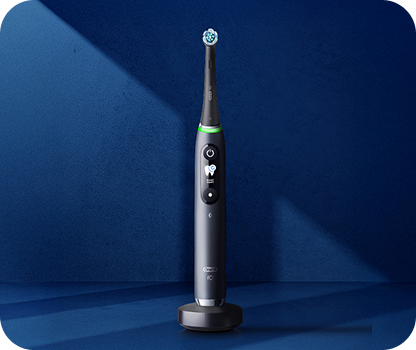
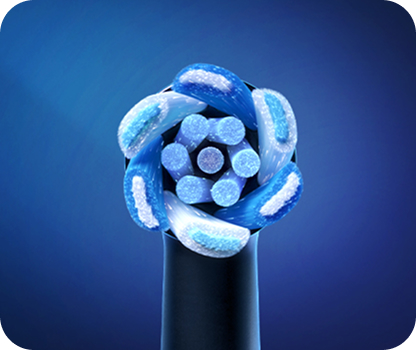
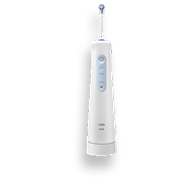
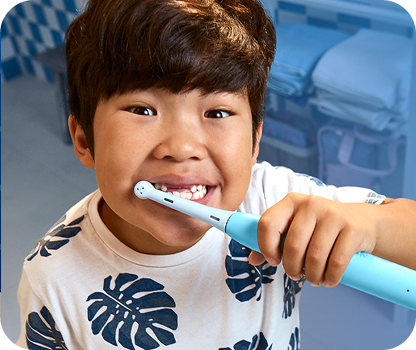
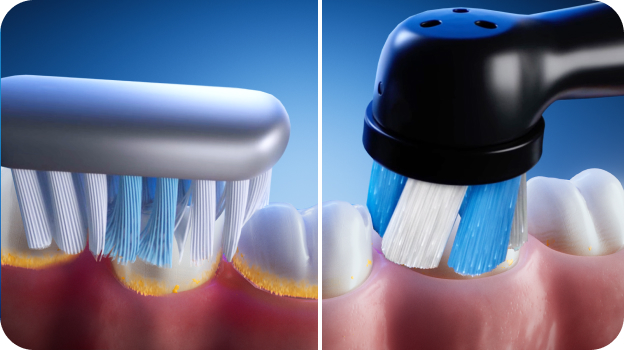
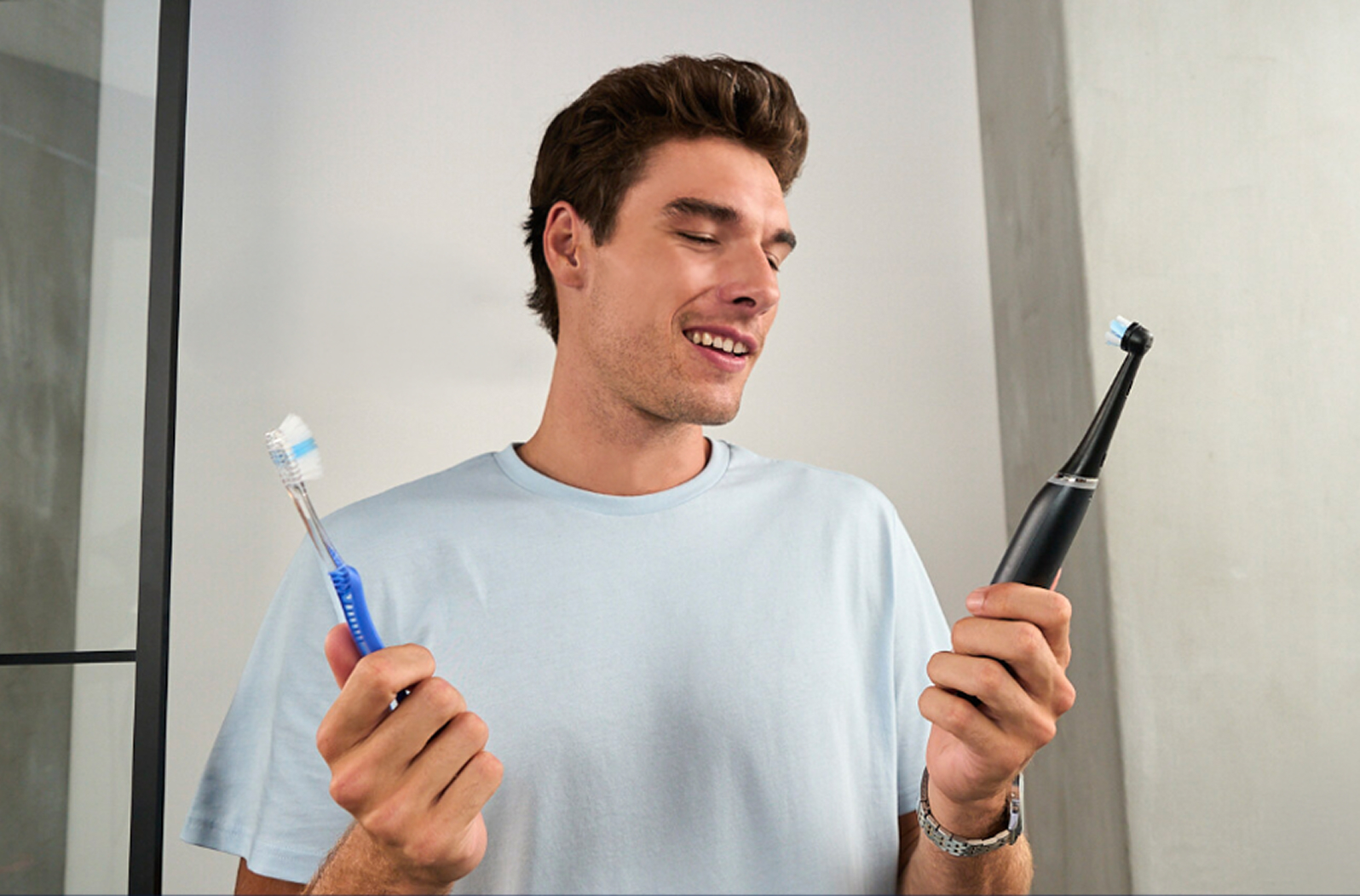
Man holding Oral-B iO electric toothbrush in one hand and a manual toothbrush in one hand.

ELECTRIC TOOTHBRUSHES

Which Toothbrush Works Best? Manual vs Sonic vs Oral-B iO

10 minute read

Last updated 08/2026

Dr. Robert Lee, a dental professional with 35 years of experience.

Approved and reviewed by Dr. Gans, a dental professional of over 10 years.

Learn More
  • Contents

  • Summary
  • Manual, Sonic, and Oral-B iO Toothbrushes Compared
  • Why Plaque Removal and Gum Health Matter
  • Manual Toothbrushes: Why Technique Matters
  • Oral-B iO: Designed to Help Remove Plaque and Support Gum Health
  • Sonic Toothbrushes: How They Compare
  • How a Complete Oral Care Routine Can Support Gum Health
  • Features That Help Support Better Brushing Habits
  • How to Build a Gum Health Routine
  • FAQs
  • Sources

Key takeaways

1

Manual toothbrushes can fall short: Manual brushes depend on brushing technique. Even with regular brushing, plaque can be missed, which may contribute to gum inflammation, also called gingivitis.

2

In clinical studies, Oral-B iO delivered stronger results than sonic and manual toothbrushes for plaque reduction and gum health: Sonic toothbrushes can clean better than manual toothbrushes, but Oral-B iO delivered stronger plaque reduction and gum health results than both.

3

Oral-B iO is designed for a more effective clean: Its dentist-inspired round brush head and gentle microvibrations help support plaque removal, while the smart pressure sensor helps guide better brushing habits.

4

Clinical evidence shows strong gum health results: In a meta-analysis of people with gingivitis, 88% of Oral-B iO users reached healthy gums, compared with 54% of sonic toothbrush users and 21% of manual toothbrush users.

5

Smart brushing features can help support better habits: Oral-B iO features a dentist-inspired round brush head, smart pressure sensor, and advanced tracking technology. In one clinical study, users achieved a median 97.2% brushing coverage after 12 days with an AI-enabled toothbrush and digital guidance.

6

A complete Crest + Oral-B routine can provide added gum health benefits: In a 12-week clinical study, 100% of participants with gingivitis who used an Oral-B iO electric toothbrush, stannous fluoride toothpaste, CPC mouth rinse, and floss reached healthy gums.

7

Gentle options are available for sensitive gums: Oral-B iO offers a Sensitive Mode and compatible gentle brush heads to help support a comfortable brushing experience while helping improve gum health.

Summary

This article compares manual, sonic, and Oral-B iO electric toothbrushes for plaque removal, brushing coverage, and gum health.It explains why brushing technique matters, how manual and sonic toothbrushes work, and how Oral-B iO’s round brush head, smart pressure sensor, and tracking technology can help support a more effective brushing routine.It also highlights clinical evidence showing how Oral-B iO and a complete Crest + Oral-B oral care system can help improve gum health.

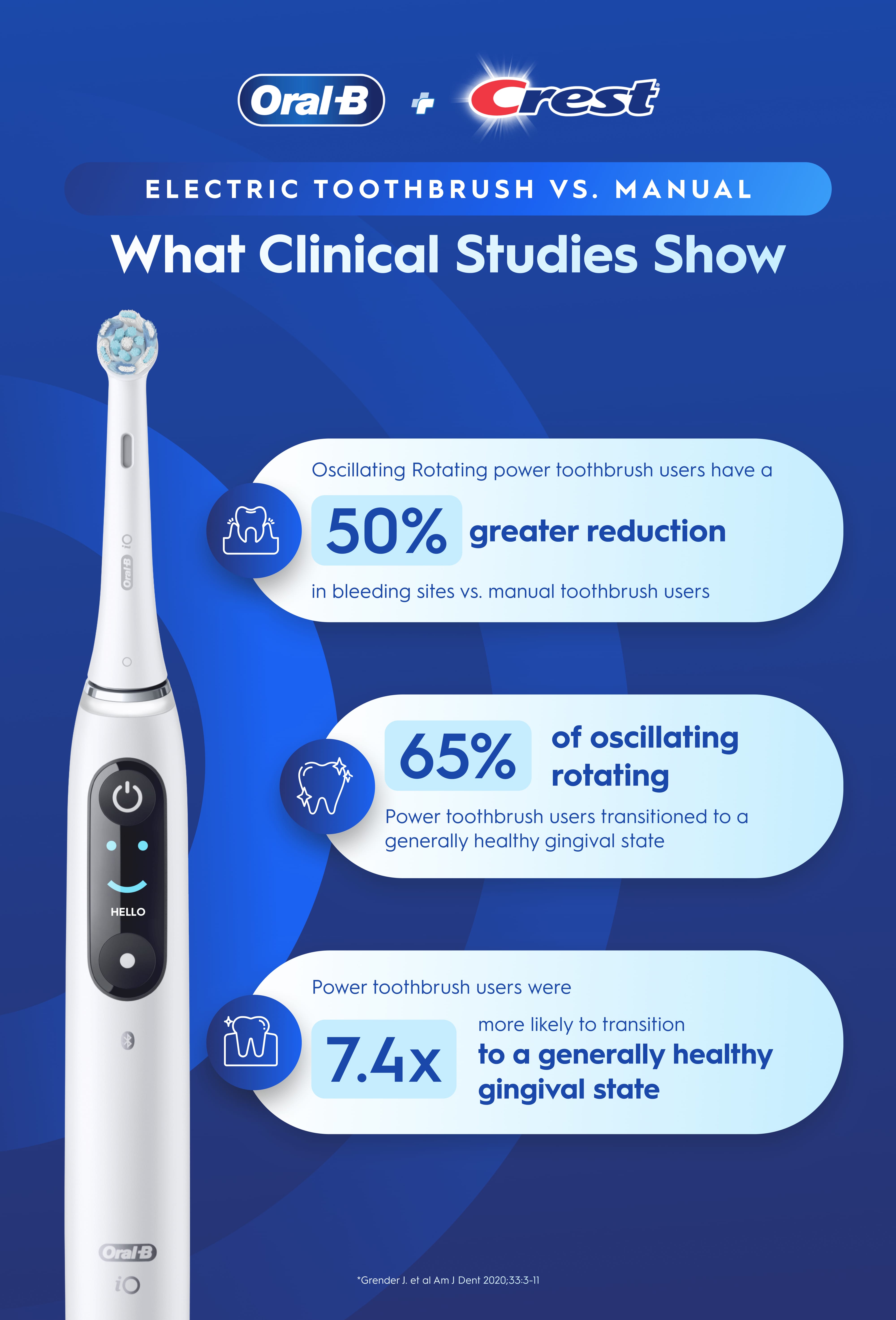
Clinical study data showing superiority of Electric Toothbrush vs manual against gum diseases.

Manual, Sonic, and Oral-B iO Toothbrushes Compared

Choosing the right toothbrush can help support a cleaner mouth and healthier gums. This guide compares manual, sonic, and Oral-B iO electric toothbrushes, including how each option works and what clinical evidence shows about plaque removal and gum health.

It also explains how Oral-B iO’s oscillating-rotating technology, round brush head, smart pressure sensor, and tracking features can help support a more effective brushing routine.

A diet that offers a range of nutrients not only helps the teeth and gums grow properly, but it also decreases the risk of tooth decay. Establishing healthy habits early on will help to protect first the baby teeth and then the adult ones as they erupt.

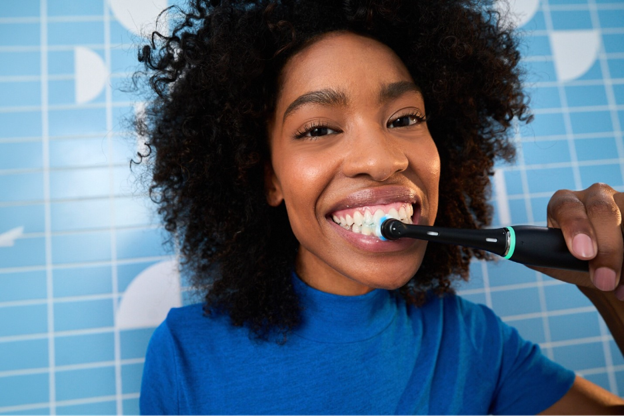
Women smiling brushing her teeth with Oral-B iO electric toothbrush

Why Plaque Removal and Gum Health Matter

Your toothbrush plays an important role in keeping your mouth clean and your gums healthy. Plaque is a sticky film of bacteria that can build up on teeth and contribute to gum inflammation, also called gingivitis, as well as cavities.

If plaque is not removed regularly, gum inflammation can worsen and may progress to periodontitis, a more serious form of gum disease that can contribute to tooth loss.

Gum inflammation, also called gingivitis, is common and can be an early sign that plaque is not being removed effectively. Because gingivitis is preventable and reversible with good oral hygiene and professional care, effective daily brushing matters.

Manual Toothbrushes: Why Technique Matters

Manual toothbrushes are familiar and widely used, but they depend heavily on brushing technique. Even when people try to brush thoroughly, research shows it can be difficult to remove plaque from all areas of the mouth.

  • Plaque can be missed: A review of manual toothbrush studies found that manual brushing may leave more than half of dental plaque behind.
  • Technique matters: Research shows many people have difficulty cleaning all tooth surfaces effectively, even when instructed to brush as well as possible.
  • Manual brushes do not offer built-in guidance: Most manual toothbrushes do not include features like timers, pressure sensors, or tracking technology that can help guide brushing habits.

Oral-B iO: Designed to Help Remove Plaque and Support Gum Health

Oral-B iO combines a dentist-inspired round brush head with oscillating-rotating technology and gentle microvibrations to help remove plaque and support gum health.

It also includes features like a smart pressure sensor and tracking technology to help guide better brushing habits. In clinical studies, Oral-B iO delivered stronger plaque reduction and gum health results than sonic and manual toothbrushes.

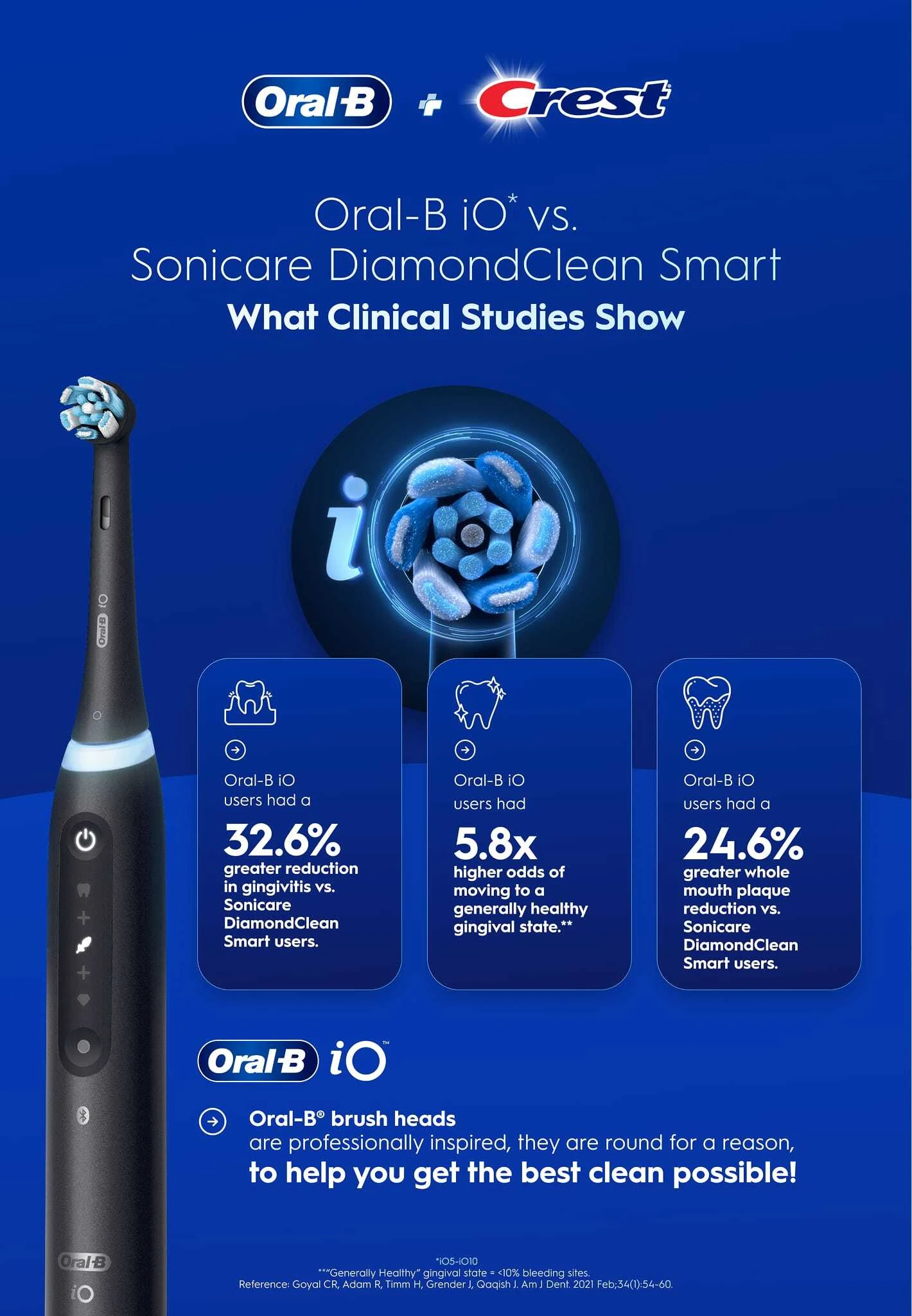
Clinical study data showing superiority of Oral-B iO compared to Sonicare DiamondClean Smart with greater reduction in gingivitis and plaque.

Sonic Toothbrushes: How They Compare

Sonic toothbrushes use high-speed side-to-side movement to help clean teeth and remove plaque.

They can clean better than manual toothbrushes, but clinical evidence shows Oral-B iO delivered stronger plaque reduction and gum health results than sonic toothbrushes in clinical studies.

Feature Oral-B iO Sonic toothbrushes
Cleaning technology Oscillating-rotating technology with gentle microvibrations High-speed side-to-side movement
Brush head design Dentist-inspired round brush head designed to surround each tooth Often uses an elongated brush head shape, similar to many manual toothbrushes
Clinical plaque and gum health results Delivered stronger plaque reduction and gum health results than sonic and manual toothbrushes in clinical studies; 88% of Oral-B iO users with early gum disease reached healthy gums. Can clean better than manual toothbrushes, but Oral-B iO delivered stronger plaque reduction and gum health results in clinical studies; 54% of sonic toothbrush users with early gum disease reached healthy gums.
Brushing guidance Smart pressure sensor and tracking technology help guide better brushing habits Features vary by model; some may include timers, pressure sensors, or app guidance


How a Complete Oral Care Routine Can Support Gum Health

A great toothbrush works even better as part of a complete oral care routine. In a 12-week clinical study of people with gingivitis, 100% of participants who used an Oral-B iO electric toothbrush, stannous fluoride toothpaste, CPC mouth rinse, and floss reached healthy gums.


Features That Help Support Better Brushing Habits

Oral-B iO includes features designed to help guide better brushing habits and support a more complete clean.

  • Dentist-inspired round brush head: Designed to surround each tooth for a more focused clean.
  • Smart pressure sensor: Helps guide brushing pressure so users can brush effectively without applying too much force. In a 36-month study, powered toothbrush users had better gum recession outcomes than manual toothbrush users.
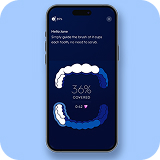
  • Tracking technology: Helps users see where they brush. In one clinical study, users achieved a median 97.2% brushing coverage after 12 days with an AI-enabled toothbrush and digital guidance.
  • Two-minute timer: Helps users brush for the dentist-recommended two minutes, supporting a more consistent daily brushing routine.

How to Build a Gum Health Routine

Healthy gums start with daily plaque control. If you notice signs of gum inflammation, such as redness, swelling, or bleeding while brushing, talk with a dental professional.

A complete routine can help support gum health at home:

  • Brush twice daily with an electric toothbrush: Oral-B iO helps remove plaque and support gum health with oscillating-rotating technology, a dentist-inspired round brush head, and brushing guidance features.
  • Choose a gentle brush head if your gums are sensitive: A gentle brush head can help support a comfortable brushing experience while helping clean along the gumline.
  • Use a stannous fluoride toothpaste: Stannous fluoride toothpaste can help fight plaque bacteria associated with gingivitis as part of a complete oral care routine.
  • Add an anti-gingivitis mouth rinse: A CPC mouth rinse can help reduce plaque and gingivitis when used as directed.
  • Clean between teeth daily: Floss helps remove plaque from areas a toothbrush may miss as part of a complete oral care routine.

Shop this article

1222|1493|1489|1502

FAQs

Which type of toothbrush is most effective?

Electric toothbrushes using oscillating-rotating technology are independently validated to reduce more plaque and gingivitis than manual brushing. The best toothbrush is ultimately the one you enjoy using every day to maintain a consistent and thorough cleaning routine.

Why does Oral-B use a round brush head?

The unique round brush head is inspired by professional dental tools to surround each individual tooth for a more focused clean. This smaller shape makes it easier to reach difficult areas in the back of the mouth where bacterial buildup often occurs.

Do I brush differently with an Oral-B electric toothbrush?

Unlike a manual brush, an electric toothbrush provides the cleaning action, so you only need to guide the head from tooth to tooth. You should hold the brush in place for a few seconds against each tooth surface rather than using a scrubbing motion.

How much pressure should I apply when brushing with an Oral-B electric toothbrush?

You should apply very light pressure and let the oscillating-rotating technology do the work of dislodging plaque. Many models include a smart pressure sensor that will alert you or slow down the motor if you begin to press too hard against your gums.

What features should I look for in a toothbrush if I have gingivitis?

Look for a toothbrush equipped with a pressure sensor and multiple cleaning modes to tailor the intensity to your comfort level. A model that pairs with a tracking app can also be beneficial for monitoring gum bleeding and ensuring you cover every area of your mouth.

What should I look for when buying an electric toothbrush?

Look for an electric toothbrush with clinical evidence for plaque and gum health benefits, a brush head that helps clean tooth by tooth, and features like a built-in timer and pressure sensor to support better brushing habits.

Oral-B iO brings these features together with a dentist-inspired round brush head, smart pressure sensor, and tracking technology to help support a more effective brushing routine. You should also consider brushing modes and brush head compatibility based on your comfort and oral health needs.

Why does gum health matter when choosing a toothbrush?

Gum health matters because plaque can build up along the gumline and contribute to gingivitis, an early form of gum disease.

Choosing a toothbrush that helps remove plaque effectively and supports consistent brushing habits can help support healthier gums. If you notice ongoing redness, swelling, or bleeding, talk with a dental professional.

Is a smart toothbrush with Bluetooth worth it?

Bluetooth connectivity can be helpful if you want real-time coaching and tracking to help you see areas you may be missing. This interactive technology can support better brushing habits by providing feedback through a smartphone app.

Which Oral-B replacement head is best for sensitive gums?

The Sensitive Gum Care and Sensitive & Gum brush heads are good options because they feature extra-soft bristles for a comfortable brushing experience.

These heads are designed to adapt to the curves of teeth and gums while helping clean gently along the gumline.

Sources

  • 1. Weik, U., et al. (2023). “You should brush your teeth better”: a randomized controlled trial comparing best-possible versus as-usual toothbrushing. BMC Oral Health, 23, 456. https://doi.org/10.1186/s12903-023-03127-3
  • 2. Zou, Y., et al. (2024). A Meta-analysis Comparing Toothbrush Technologies on Gingivitis and Plaque. International Dental Journal, 74(1), 146–156. https://doi.org/10.1016/j.identj.2023.06.009
  • 3. Luo, C., Chen, N., Jing, Q., Hu, S., Wan, S., Zhang, S., Liu, G., Li, N., & Zhao, L.-Y. (2026). Comparative efficacy of electric toothbrush technologies in plaque and gingivitis reduction: a network meta-analysis. Clinical Oral Investigations, 30, 270. https://doi.org/10.1007/s00784-026-06955-z
  • 4. Li, Y., et al. (2024). Enhanced control of periodontitis by an artificial intelligence-enabled multimodal-sensing toothbrush. Journal of Clinical Periodontology, 51(12), 1632–1643. https://doi.org/10.1111/jcpe.13987
  • 5. Adam, R., et al. (2021). Anti-gingivitis and Anti-plaque Efficacy of an Oral Hygiene System: Results From a 12-Week Randomized Controlled Trial. Compendium of Continuing Education in Dentistry, 42(9), e1–e4.
  • 6. Grender, J., et al. (2022). A 12-Week Randomized Controlled Trial Comparing a Novel Electric Toothbrush With an Extra Gentle Brush Head to a Manual Toothbrush for Plaque and Gingivitis Reduction. Compendium of Continuing Education in Dentistry, 43(1), 17–25.
  • 7. Slot, D. E., et al. (2012). The efficacy of manual toothbrushes: a systematic review. International Journal of Dental Hygiene, 10(3), 187–197. https://doi.org/10.1111/j.1601-5037.2012.00557.x
  • 8. Thurnay, S., Adam, R., & Meyners, M. (2022). A Global, In-Market Evaluation of Toothbrushing Behaviour and Self-assessed Gingival Bleeding with Use of App Data from an Interactive Electric Toothbrush. Oral Health & Preventive Dentistry, 20, 1–10. https://doi.org/10.3290/j.ohpd.b2572911
  • 9. Sutor, S., et al. (2025). Effect of a powered and a manual toothbrush in subjects susceptible to gingival recession: A 36-month study. International Journal of Dental Hygiene, 23(1), 26–36. https://doi.org/10.1111/idh.12834