What Does A Cavity Feel Like?

Frustrated young man touching the side of his jaw and frowning
Last Updated : December 04, 2025

SUMMARY

Anyone can get cavities and most people get at least one cavity in their life. Cavities are holes that form in teeth and are a sign of tooth decay. A dentist can determine if you have a cavity and can treat it, usually using a tooth filling. What a cavity feels like depends on the severity of the hole and other conditions. An early cavity may go unnoticed. Yet, as the cavity progresses typically you will feel pain, an ache in the tooth or have tooth sensitivity. It’s best to consult a dentist right away if you experience discomfort in your mouth or with your teeth! Maintaining great oral hygiene routines can prevent cavities. Using an electric toothbrush also helps to remove plaque more effectively. By removing plaque, you can help prevent tartar (hardened plaque) from forming, thus preventing cavities.

Key Takeaways

  • Having a cavity is common and most people experience at least one cavity in their lifetime.
  • A cavity can affect anyone and is most often a sign of a combination of factors, including oral hygiene, diet, and genetics.
  • Cavities can also form based on your diet and if you consume more sugary or starchy foods and don’t maintain proper oral care.
  • Signs and symptoms of a cavity may show up as a toothache, pain, tooth sensitivity or bad breath.
  • A dentist can diagnose a cavity and determine what the best treatment is.
  • Tooth filings are typically used to treat cavities.
  • Brushing twice daily and flossing once daily, along with maintaining great oral hygiene, can prevent cavities.

Table of Contents

drlee-image

This blog has been reviewed and approved by Dr Robert Lee, a dental professional of 35 years

LEARN MORE >

Key Takeaways


The majority of people will get a cavity in their lifetime and cavities can show up with some kind of pain in the mouth, especially as they progress. Having any kind of pain or discomfort in your mouth is annoying and inconvenient. It’s best to not ignore dental issues and get to your dentist quickly to determine what is causing the issues. What a cavity feels like can vary from person to person. Often any tooth sensitivity or pain is often related to cavities and if left untreated can develop into other dental issues. However, you can have a cavity, and symptoms may go unnoticed too. Oral-B has oral health tips below to help you understand more about cavities and how to prevent them.

Cavity

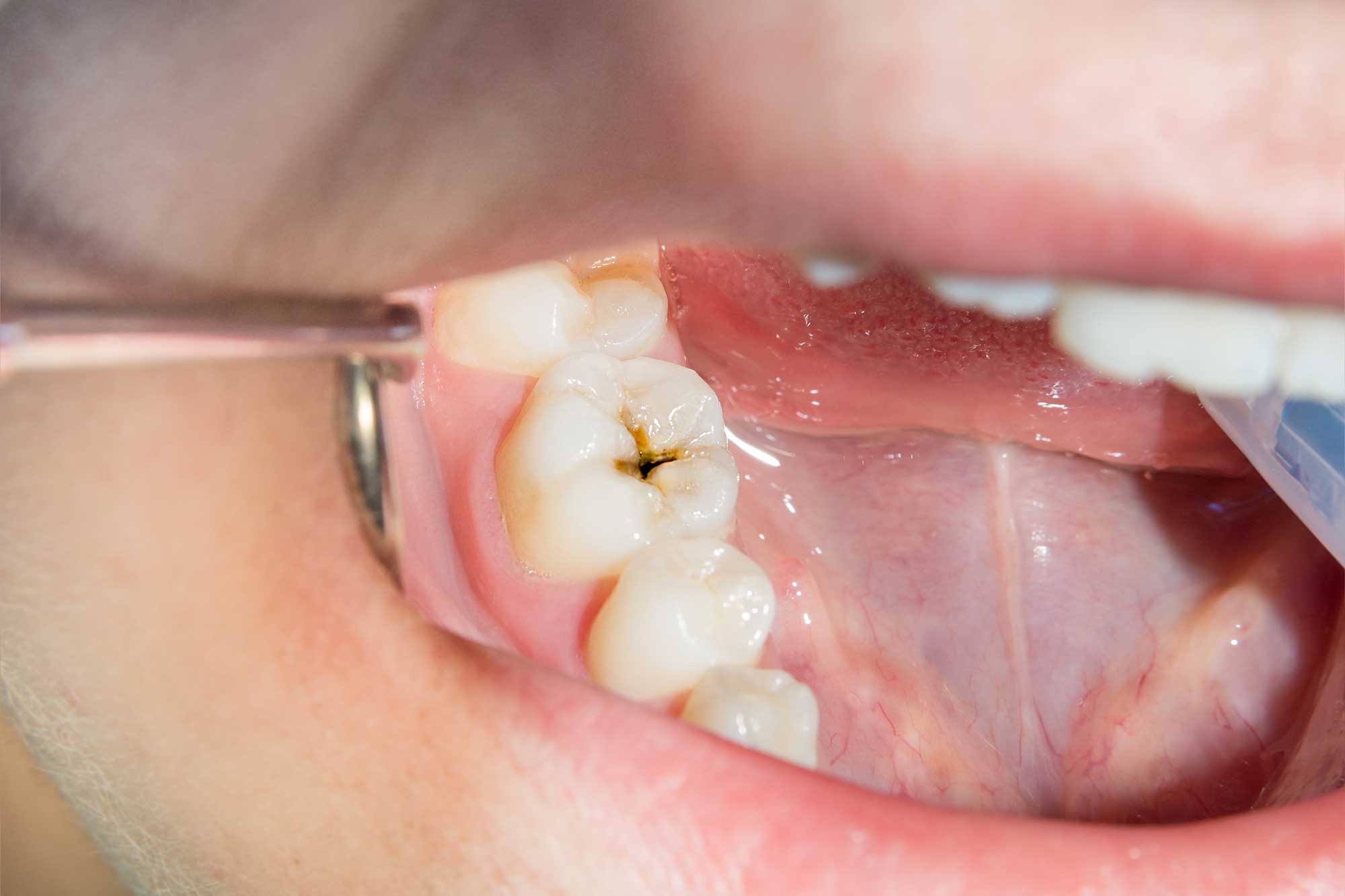
Close up of tooth with cavity being examined at a dentist’s office

A cavity can show up in anyone’s teeth, even children. It is common to have at least one cavity in your lifetime. Typically, cavities form because of improper brushing or flossing. Your diet and consuming more sugary, sweet and starchy foods can also increase the chance of cavities forming. Dentists can diagnose cavities in your mouth by looking at x-rays and doing an exam of your mouth while looking at any areas of your teeth that feel sensitive.

Maintaining proper oral hygiene and brushing and flossing your teeth daily helps prevent cavities. Also, using an electric toothbrush can improve your brushing habits and remove plaque and prevent tartar more effectively, thus preventing cavities.

What is a Cavity?

A cavity is essentially a hole in your tooth. It's possible to have more than one cavity at a time or multiple cavities on one tooth. Cavities are a form of tooth decay caused by acids produced by plaque bacteria. While tartar (hardened plaque) contributes to gum issues, it is the plaque that actively causes tooth decay. Your dentist will find the area on a tooth that has a hole and will determine how severe the cavity is and how to treat the tooth decay area.

You always want to treat a cavity right away and not ignore any tooth symptoms or unusual sensations so that the issues don't lead to more serious infections or other complications.

What Does a Cavity Feel Like?

A cavity typically is felt with symptoms of pain, agitation and aches. However, how a cavity feels depends on how large or deep the hole is and what stage your cavity has progressed to. Cavities that have been in your mouth longer will likely feel more painful.

The depth of the cavity is a primary factor in how painful it feels. If the cavity is on the outer enamel of the tooth, it usually is not painful and may go unnoticed. Though, if the cavity penetrates the outer enamel and reaches the softer dentin layer beneath, you may feel sensitivity. If it progresses deeper into the tooth’s pulp, you will likely experience more significant and painful symptoms.

Symptoms and Signs of a Cavity

Woman having mouth pain

If you have a cavity your signs and symptoms may vary. Always get to see your dentist if you notice pain or issues in your teeth, it could be a sign or symptom of a cavity.

You may have a cavity if you have the following symptoms:

  • Toothaches
  • Pain in your mouth or around your teeth
  • Tooth sensitivity in your mouth
  • Bad breath

Early Cavity

You may not notice when a cavity begins to develop in your mouth. An early cavity can go unnoticed, and you may have no symptoms until it gets worse. Sometimes you can see a tooth's surface begin to change with small white or chalky spots, yet cavities are not always visible to the naked eye.

  • Demineralization is the first stage of a cavity, where the minerals in your tooth enamel begin to break down.
  • Sometimes people may experience tooth sensitivity while brushing or flossing.
  • Eating or drinking hot or cold foods may trigger sensitivity in your teeth that may be a symptom of an early cavity developing.

Treating a Cavity

A cavity is diagnosed and treated by your dentist. Typically, a dentist will do a tooth filling on the hole where the cavity resides. However, if the cavity is severe or other issues are present, other treatments may be recommended. What matters is that you get to your dentist promptly when you start noticing signs or symptoms of a cavity.

Oral Hygiene Tips to Prevent Cavities

Keep your teeth clean and cavity-free. Things like tooth decay and tartar happen when plaque forms on teeth as a sticky film. Plaque contains bacteria that feed on sugar from food and drinks. As these bacteria metabolize sugar, they release acids that can dissolve tooth enamel. This can lead to cavities and other problems. But help is just a toothbrush away. Here are a few suggestions to help establish a regular, effective routine.

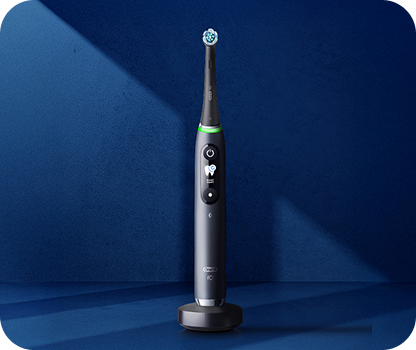
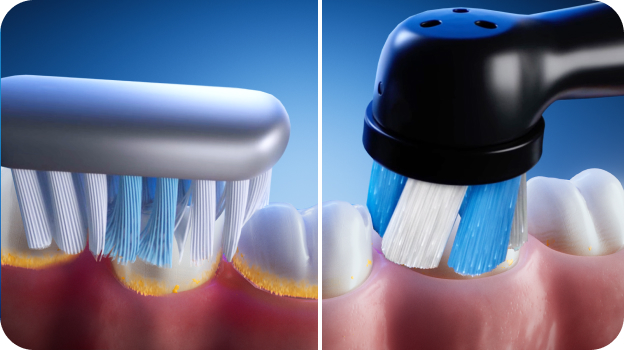
  • Try switching to an electric toothbrush, such as the Oral-B iO electric toothbrush, which protects teeth and gums from the leading causes of tooth decay, signs of early gum disease, and tooth loss.
  • The right toothbrush head, such as the Oral-B iO Ultimate Clean brush head, removes plaque and has different bristle lengths that reach deep into the spaces between your teeth, where plaque bacteria love to hide.
  • Use with a fluoride toothpaste like Crest ProHealth Toothpaste which contains stannous fluoride to protect against cavities, or Crest Cavity Protection toothpaste, which uses sodium fluoride to strengthen enamel.
  • To further protect against cavities, swish with a fluoride-containing mouthwash like Crest Pro-Health Multi-Protection Mouthwash, which helps kill bacteria and prevent cavities.
  • To help prevent tooth decay and reduce your risk of developing gum disease by removing plaque, floss your teeth at least once a day with Oral-B floss, and make sure you get around every tooth. Another easy add-on to help your oral care and prevent cavities from forming is to use an Oral-B water flosser.

Research has shown an association between oral health conditions like gum disease and systemic health problems, including cardiovascular disease. That’s why Oral-B, in partnership with Crest, is committed to championing oral health for all, conducting research and creating products to help with a wide range of oral health conditions. Oral-B products are scientifically proven to protect teeth and gums from the leading causes of tooth decay, gum disease, and tooth loss.

FAQs

  • What does a cavity feel like when it starts?
  • How do you know if you have a cavity?
  • Can a cavity go away on its own?
  • What does a cavity look like?

Sources


Adam R. (2024) New Technologies Shaping the Future of Oral Hygiene. Scientia, Medical and Health Sciences. https://doi.org/10.33548/SCIENTIA1033

Chen, C. K., et al. (2017). Association between chronic periodontitis and the risk of Alzheimer's disease: A retrospective, population-based, matched-cohort study. Alzheimer's Research & Therapy, 9, 56. https://doi.org/10.1186/s13195-017-0282-6

Chen, D., et al. (2024). Interactions and effects of a stannous-containing sodium fluoride dentifrice on oral pathogens and the oral microbiome. Frontiers in Microbiology, 15, 1327913. https://doi.org/10.3389/fmicb.2024.1327913

Ganss, C., et al. N. (2018). Tooth brushing motion patterns with manual and powered toothbrushes-a randomised video observation study. Clinical Oral Investigations, 22(2), 715–720. https://doi.org/10.1007/s00784-017-2146-7

Grender, J., et al. (2020). An 8-week randomized controlled trial comparing the effect of a novel oscillating-rotating toothbrush versus a manual toothbrush on plaque and gingivitis. International Dental Journal, 70, S7–S15. https://doi.org/10.1111/idj.12571

Grossi, S. G., et al. (1998). Periodontal disease and diabetes mellitus: A two-way relationship. Annals of Periodontology, 3, 51-61. https://doi.org/10.1902/annals.1998.3.1.51

Janket, S. J., et al. (2003). Meta-analysis of periodontal disease and risk for coronary heart disease and stroke. Oral Surgery, Oral Medicine, Oral Pathology, Oral Radiology, and Endodontology, 95, 559-569. https://doi.org/10.1067/moe.2003.107

Thurnay, S., et al. (2022). A Global, In-Market Evaluation of Toothbrushing Behaviour and Self-assessed Gingival Bleeding with Use of App Data from an Interactive Electric Toothbrush. Oral Health & Preventive Dentistry, 20, 1–10. https://doi.org/10.3290/j.ohpd.b2572911

Zou, Y., et al. (2024). A meta-analysis comparing toothbrush technologies on gingivitis and plaque. International Dental Journal, 74(1), 146-156. https://doi.org/10.1016/j.identj.2023.06.009

Table of Contents

  • Cavity
  • What is a Cavity?
  • What Does a Cavity Feel Like?
  • Symptoms and Signs of a Cavity
  • Early Cavity
  • Treating a Cavity
  • Oral Hygiene Tips to Prevent Cavities

  • FAQs
  • Sources
drlee-image

This blog has been reviewed and approved by Dr Robert Lee, a dental professional of 35 years

LEARN MORE >

Related Products

1222