
Braces: Types & How They Work

Summary
Key Takeaways
- Braces gradually move teeth into place using gentle, consistent pressure.
- Types of braces include metal, ceramic, lingual, and clear aligners.
- Treatment times vary but often range from 12 to 36 months.
- Regular check-ups and good oral hygiene are essential during treatment.
- Clear aligners offer discreet treatment but aren't suitable for all cases.
Table of Contents

This blog has been reviewed and approved by Dr Robert Lee, a dental professional of 35 years
LEARN MORE >

Key Takeaways
How Braces Work: The Basics
Let's begin with the basics. Braces work by applying steady, gentle pressure to your teeth over time. This pressure slowly and methodically moves your teeth into better alignment. It's not just about straightening; braces also help correct bite issues like overbites, underbites, and crossbites.
Each tooth is anchored in place by a structure called the periodontal ligament. This ligament allows for tiny shifts when pressure is applied. Braces use this principle to continuously encourage teeth to move in specific directions. As the teeth shift, bone on one side of the root resorbs (breaks down) while new bone forms on the other side, securing the tooth in its new position. This process is called bone remodeling.
The key components in most braces systems include these consistent elements:
- Brackets: Small squares attached to each tooth.
- Archwire: A wire threaded through the brackets that guides tooth movement.
- Bands: Elastic or metal rings that anchor the archwire.
- Ligatures: Tiny rubber bands that hold the wire in place.
- Elastics (optional): Used to correct bite alignment by connecting upper and lower teeth.
The pressure applied by these components is adjusted periodically by your orthodontist to keep your teeth moving in the right direction.
Types of Braces
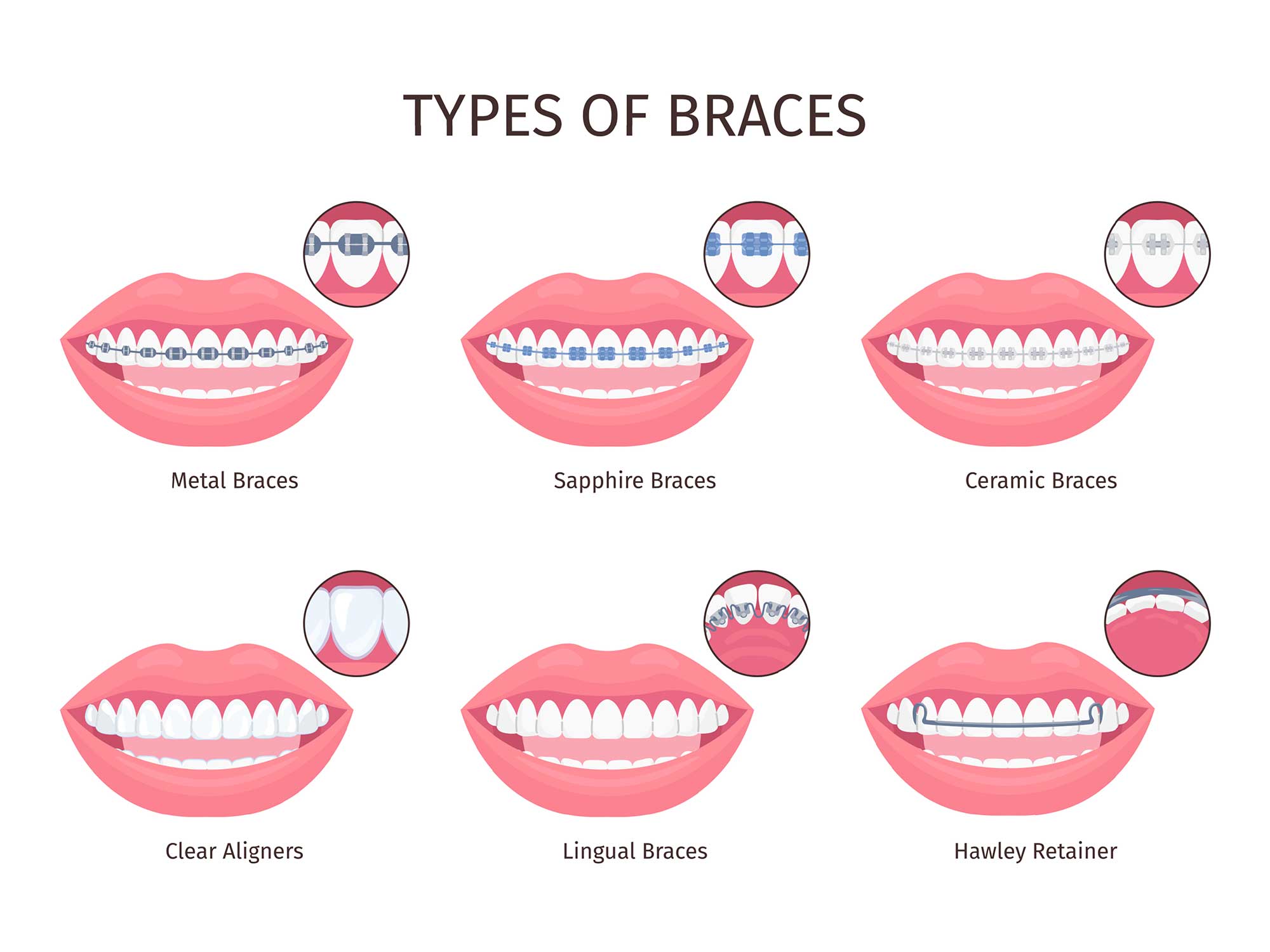
There's no one-size-fits-all approach when it comes to braces. Your age, lifestyle, orthodontic needs, and personal preferences all play a role in choosing the right type. Ultimately, any decision you make will be in consultation with your orthodontist, but it's helpful to know your options going in. Here's a breakdown of the four most common types:
1. Traditional Metal Braces
These are the braces most people think of: metal brackets bonded to the front of the teeth with a metal wire running through them. Modern versions are smaller and more comfortable than the ones from decades past. They're best for complex dental issues, durability, and cost-effectiveness.
Pros:
- Very effective for major corrections
- Often the most affordable option
- Strong and durable
Cons:
- Most noticeable type of braces
- Can cause minor discomfort or irritation
2. Ceramic Braces
Ceramic braces work just like metal braces, but use clear or tooth-colored brackets, making them less visible. They're popular among teens and adults who want effective treatment without the old school metallic look. These are best for people who want a less noticeable option than metal braces.
Pros:
- Less visible than metal braces
- Works as effectively as metal in many cases
Cons:
- Brackets can stain if not cleaned well
- Typically, they're more fragile than metal braces
- Slightly more expensive than traditional
3. Lingual Braces
These are ideal for discreet treatment for moderate to complex cases. Lingual braces are placed behind your teeth instead of in front, so they're invisible from the outside. They function similarly to traditional braces, but can be more complex to install and maintain, which can also make them more costly.
Pros:
- Completely hidden from view
- Suitable for many types of alignment issues
Cons:
- May cause more tongue discomfort
- Can be harder to clean
- Typically, more expensive
- Treatment may take longer
4. Clear Aligners (e.g., Invisalign)
Clear aligners are custom-made plastic trays that fit snugly over your teeth. You wear each set of aligners for about 1-2 weeks before switching to the next. They slowly move your teeth without the need for brackets or wires. These are best for mild to moderate alignment issues, and for adults and teens seeking a discreet option.
Pros:
- Nearly invisible
- Removable for eating and cleaning
- Fewer office visits
Cons:
- Must be worn 20-22 hours a day to be effective
- Not suitable for very complex issues
- Can be lost or damaged more easily
Choosing the Right Type

Your orthodontist will help determine the best option for you based on a few factors: the complexity of your case, your age and lifestyle, budget, and aesthetic preferences. For example, a teenager with significant bite issues might benefit most from metal braces, while a working adult with minor teeth crowding might prefer clear aligners. That's why knowing your options can be helpful when you consult with your orthodontist.
What to Expect During Treatment
Initial Consultation
Your orthodontist will take X-rays, photos, and/or digital scans of your teeth. They'll map out a treatment plan and discuss your options.
Installation
Depending on the type, placing braces or aligners takes one to two hours. For traditional braces, brackets are cemented to your teeth and connected with wires. For aligners, you'll receive your first sets along with instructions.
Adjustments
Braces are adjusted every 4-8 weeks, while aligners are replaced every 1-2 weeks. Expect some soreness for a day or two after each adjustment.
Oral Hygiene
Brushing and flossing become more important, and honestly, a bit trickier. You may need special flossers, brushes, or water flossers to help clean better around brackets and wires. With aligners, you must brush your teeth before putting them back in after eating.
Diet Changes
With traditional braces, sticky, hard, or crunchy foods should be avoided to prevent damage. Clear aligner users must remove them before eating and should brush their teeth before putting them back in to avoid trapping food and sugars against the teeth.
Treatment Time
Most treatments last between 12 and 36 months, depending on the complexity of the issues and the type of braces used.
Aftercare, aka Retainers Matter
Once your braces come off, your orthodontist will provide a retainer to keep your teeth from shifting back. You'll likely wear it full-time at first, then just at night. But be vigilant and stick with it. Skipping your retainer can allow your teeth to shift and undo months, or years, of progress, so it's important to stick with the aftercare plan.
When Should You See an Orthodontist?
The American Association of Orthodontists recommends that children have their first orthodontic screening by age 7. That way, you and the orthodontist can get a head start on any issues. However, braces aren't just for kids. More adults than ever choose them to correct long-standing alignment issues or improve their smile.
You should consider seeing an orthodontist if you notice:
- Crowded or crooked teeth
- Overbites or underbites
- Jaw pain or clicking
- Difficulty chewing
- Gaps between teeth
Summary
Braces are a reliable and effective way to straighten teeth and improve bite alignment. Whether you choose traditional metal braces, ceramic options, lingual braces, or clear aligners, the goal remains the same: to guide your teeth into better positions using gentle, consistent pressure. Each type has its own benefits and drawbacks, and the best choice depends on your unique dental needs, lifestyle, and budget. While treatment typically takes 1-3 years, the results can last a lifetime—especially if you follow through with retainer use afterward. Good oral hygiene and regular checkups are essential during your braces journey. Whether you're a teen or an adult, the right braces can help you achieve the smile you've always wanted.
Braces: Supporting Your Orthodontic Journey and Oral Health
Braces help straighten your smile and correct misalignment, but brackets and wires can also create new areas for plaque to hide—making your smile more vulnerable to staining, tooth decay, and gum disease. A thorough oral care routine can help keep your mouth healthy to ensure you get the most out of your treatment while preventing oral health issues down the road.
When wearing braces be sure to:
- Pair It with an Oral-B iO Targeted Clean Replacement Brush Head: This brush head is specifically designed with a targeted bristle pattern to clean effectively around brackets and wires. For days when your teeth and gums feel extra sensitive after an adjustment, the Oral-B iO Gentle Care Replacement Brush Head is an excellent alternative.
- Protect Your Smile with Crest Pro-Health Toothpaste: Brush twice daily with a Crest stannous fluoride toothpaste to help prevent cavities, strengthen enamel, reduce gum inflammation to help reverse early gum disease (gingivitis), and keep your smile healthy.
- Amp Up Your Flossing Routine with the Oral-B Water Flosser Advanced: When paired with traditional string floss, a water flosser can help remove food debris and plaque from hard-to-reach areas. The Oral-B Water Flosser Advanced features customizable intensities and a targeted stream to more easily wash away leftover particles from between teeth and around brackets and wires.
- Rinse with Crest Pro-Health Mouthwash: Round out your brushing and flossing routine with an alcohol-free, anti-plaque/anti-gingivitis mouthwash to kill plaque bacteria, help prevent gingivitis, and keep your mouth fresh and healthy.
- Maintain a Balanced Diet: Foods high in sugars can increase plaque buildup, especially when wearing braces. Opt for fruits, vegetables, and whole grains to help limit plaque bacteria and keep your smile healthy.
- Visit Your Dental Professional Regularly: Keep up with regular with orthodontic visits to keep braces properly adjusted. Additionally, it's important to go in for professional cleanings and checkups at least twice a year to better monitor your oral health.
Following a complete oral care routine while wearing braces can help keep your teeth and gums healthy, so when those brackets and wires do come off, you can confidently reveal your newly straightened, strong, bright smile.
FAQs
-
What are the different types of braces available?
-
How do braces work to straighten teeth?
-
How long does the treatment with braces typically last?
-
Are there any foods to avoid while wearing braces?
Sources
- https://aaoinfo.org/treatments/braces/
- https://aaoinfo.org/whats-trending/braces-vs-clear-aligners/
- https://my.clevelandclinic.org/health/treatments/24601-teeth-braces
- https://newsnetwork.mayoclinic.org/discussion/weekend-wellness-early-initial-exam-by-orthodontist-provides-baseline-assessment-of-childs-teeth-jaws/
- https://www.webmd.com/oral-health/what-to-know-about-ceramic-braces
- https://www.webmd.com/oral-health/what-to-know-about-lingual-braces
- http://www.webmd.com/oral-health/guide/care-of-braces-retainers
- http://www.webmd.com/oral-health/guide/braces-and-retainers
- http://www.bracesguide.com/duringbraces/braces-pain-management.html
- https://www.verywell.com/braces-and-orthodontic-treatment-1059330
- https://aaoinfo.org/whats-trending/do-braces-hurt-your-comprehensive-guide-to-managing-orthodontic-pain/
- Grender, J., et al. (2022). A 12-Week Randomized Controlled Trial Comparing a Novel Electric Toothbrush With an Extra Gentle Brush Head to a Manual Toothbrush for Plaque and Gingivitis Reduction. Compendium of Continuing Education in Dentistry (Jamesburg, N.J. : 1995), 43(3), f20–f29.
- Van Elslande D. (2022). Use of an Oscillating-Rotating Electric Toothbrush and Novel Brush Head to Increase Brushing Motivation and Reduce Plaque Among Orthodontic Patients. Compendium of continuing education in dentistry (Jamesburg, N.J. : 1995), 43(3), f14–f19.
- Biesbrock, A., et al. (2019). The effects of bioavailable gluconate chelated stannous fluoride dentifrice on gingival bleeding: Meta-analysis of eighteen randomized controlled trials. Journal of Clinical Periodontology, 46(12), 1205-1216. https://doi.org/10.1111/jcpe.13203
Table of Contents
- How Braces Work: The Basics
- Types of Braces
- Choosing the Right Type
- What to Expect During Treatment
- Aftercare, aka Retainers Matter
- When Should You See an Orthodontist?
- Summary
- Braces: Supporting Your Orthodontic Journey and Oral Health
-
- FAQs
- Sources

This blog has been reviewed and approved by Dr Robert Lee, a dental professional of 35 years
LEARN MORE >

Sign Up
to get tips about healthy teeth, expert advice, and exclusive offers.
Sign Up
to get tips about healthy teeth, expert advice, and exclusive offers.